
Markets
A 25-Basis-Point Nudge, a Bigger Message: How the RBI Repo Rate Hike Is Reshaping India’s Economy
By MILLENNIUM NEWSROOM Desk · Published: Oct 09, 2026 08:18 PM
4 min read
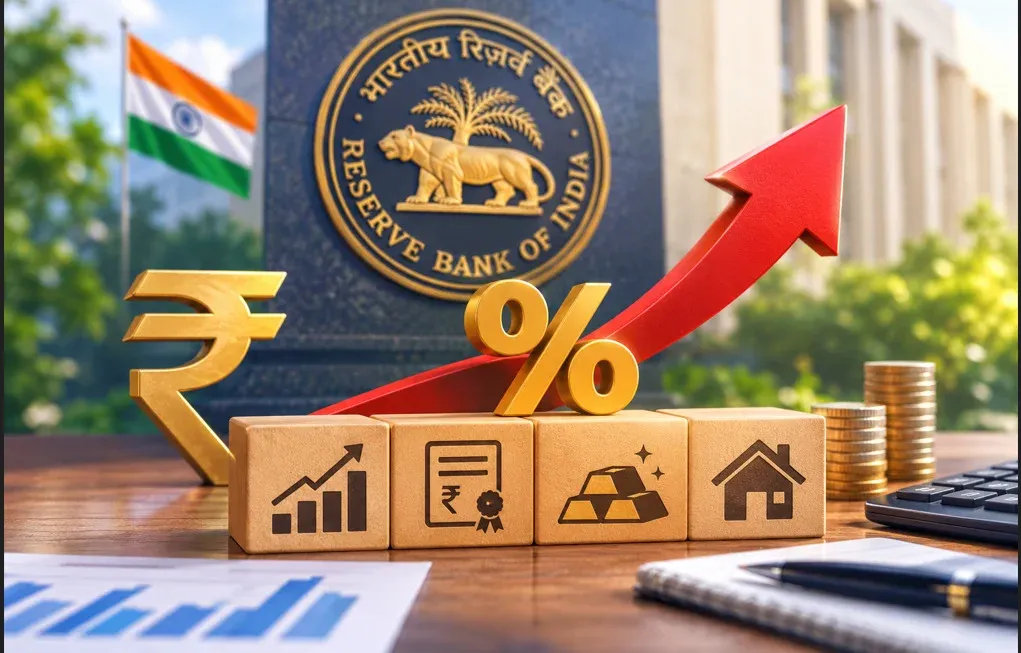
The Reserve Bank of India (RBI) has raised the repo rate by 25 basis points to 5.50%, a modest move on paper that signals a clear change of direction for the Indian economy. The RBI repo rate hike shifts the central bank’s focus from boosting liquidity to controlling price inflation, and its effects are already being weighed across equities, bonds, gold and housing.
Why the RBI Repo Rate Hike Matters
The increase is small, but the message is not. Analysts read it as the start of calibrated tightening: inflation remains a problem even as growth stays strong and stable. With the priority now on keeping prices in check, the move opens the door to a broad repricing of risk across asset classes.
For households, businesses and investors alike, the key question is no longer only where the repo rate stands today. It is how much further tightening the market expects, and how much of it is already reflected in prices.
Also Read:
How AI Is Helping New-Age Investors Make More Informed Stock Market Decisions
Equity Markets: Selective, Not Sweeping
The impact on stock markets is likely to be selective rather than widespread. Higher interest rates mean higher borrowing costs, which can hurt highly leveraged corporations and companies that depend on inexpensive financing.
Overvalued growth stocks may also come under valuation pressure. As risk-free yields rise, the value placed on future earnings falls. On the other hand, businesses with healthy cash flows, reasonable debt levels and pricing power may fare relatively better, particularly because domestic growth remains uninterrupted.
Bond Market Feels It First
The debt market may be the first to react. When rates rise, existing bonds that pay lower coupons lose appeal, and their prices can fall. Longer-duration bonds are the most exposed.
“The debt market may experience a more immediate effect. Rising rates mean that existing bonds with lower coupons become less attractive, resulting in a possible drop in price. Bonds with longer durations are the most vulnerable to this impact,” said Piyush Jhunjhunwala, Founder and CEO, Stockify.
Investors who benefited from falling rates may now need to revisit how much duration risk sits in their portfolios. Shorter-duration, higher-rated bonds can offer more stability during a tight monetary period, while credit risk gains importance as the cost of funding climbs.
Also Read:
India's Clean Energy Shift Moves From Capacity Race to System Transformation
Gold: A Different Story
Gold presents a more nuanced picture. Higher rates can reduce the appeal of an asset that generates no income, yet worries about inflation can keep demand supported. Currency movements can also influence what Indian investors pay for the metal, even when global prices are unchanged. In that sense, gold may work better as a diversification tool than as a signal of broader market trends.
Real Estate and Borrowing Costs
Housing and commercial property are watching closely, because financing costs sit at the heart of both. How far the hike translates into costlier loans will depend on lending conditions and how quickly the rate change is passed on by lenders.
“Real estate has an important role in this journey—creating homes, enabling businesses, and generating employment across the economy. While the implications for borrowing costs will depend on lending conditions and transmission, housing affordability and access to finance remain important considerations for the sector’s sustained growth,” said Shekhar Patel, Managing Director & CEO, Ganesh Housing Limited, and President, CREDAI National.
Beyond homes, commercial real estate continues to benefit from India’s position as a destination for global capability centres (GCCs) and enterprise expansion. Long-term occupier strategies, talent availability and quality infrastructure are likely to remain important drivers of demand alongside financing costs.
Cities such as Ahmedabad are well placed to take part in this opportunity. Gujarat’s emphasis on infrastructure and its policy focus on GCCs and industry provide a supportive backdrop for investment, subject to implementation and broader market conditions.
What Happens Next
The path from here depends largely on inflation. If prices stay high, markets may start pricing in a prolonged period of tight policy, which would add pressure on expensive stocks and long-term loans. If inflation eases, the 25-basis-point increase could prove to be a small step rather than the beginning of an aggressive tightening cycle.
Continued coordination across policy, infrastructure and urban development can help turn India’s economic potential into lasting opportunities, supporting the vision of Viksit Bharat.
Also Read:
India's Circular Economy Is Turning Industrial Waste Into Its Next Big Business Opportunity
What Investors Should Do Now
In a rising-rate environment, quality matters more than hasty exits from risk. Strong balance sheets, stable profit accumulation, justified valuations and sound diversification become even more important. Investors who focus on these basics, rather than reacting to every headline, will be better placed to handle the repricing that the RBI repo rate hike has set in motion.