
Business
The Résumé Is Losing Its Grip on India's Job Market
By MILLENNIUM NEWSROOM Desk · Published: Oct 06, 2026 09:52 PM
4 min read
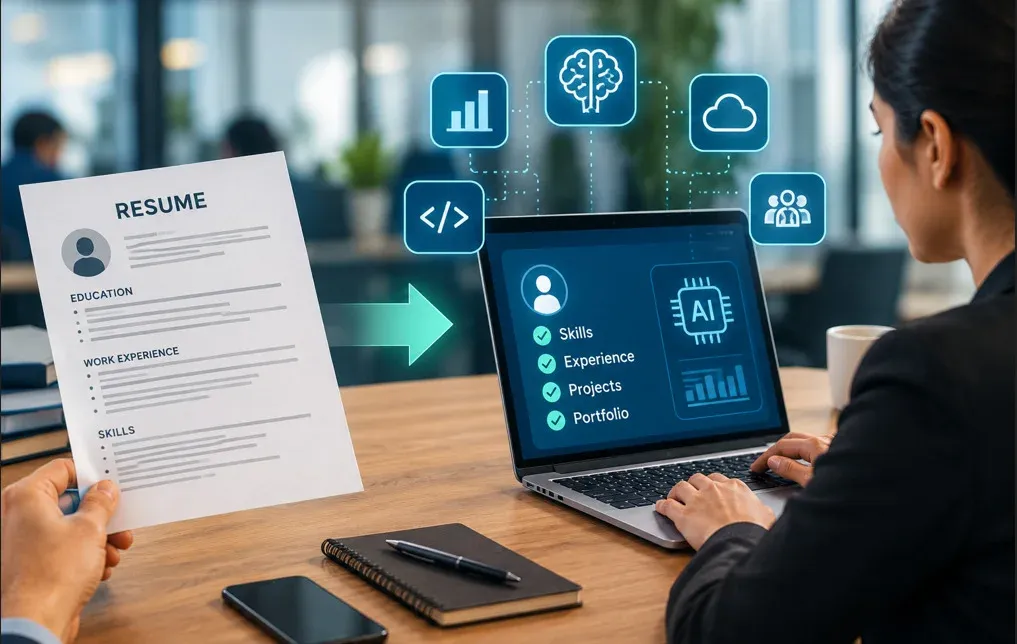
India's hiring playbook is being rewritten. Degrees still open doors, but employers increasingly ask candidates to prove what they can do. At the same time, artificial intelligence is reshaping both the jobs on offer and the way people are recruited. The shift is changing what hiring in India rewards, from qualifications to demonstrated ability.
Degrees are now a signal, not a gate
A decade ago, the "ideal candidate" held the right degree and the right number of years in the seat. Today, relevant hands-on experience counts for more than tenure. Adaptability has become arguably the top hiring criterion, because tools, briefs and business priorities keep shifting. Communication has changed too. With teams spread across locations and time zones, written, asynchronous and cross-cultural skills matter as much as presence in the room.
Also Read:
Delhi Police breaks peace at Jantar Mantar 2.0. Detains independent journalists and passers-by from the protest site
Skills-based hiring: a hybrid reality
The move to skills-based hiring is real but incomplete. Only 21% of corporates have fully adopted a skills-first approach, so most employers still balance skills with credentials. The direction is clear, though: 64% of employers rate AI, data and cyber skills above the college brand. Cloud and data analytics are also in demand, along with proof of applied work, meaning what a candidate has built or solved rather than only what they studied. Regulated professions such as audit, accounting, tax and risk remain the exception, with formal qualifications still carrying weight. For leaders, judgement and empathy count as much as technical depth.
AI fluency becomes the baseline
Expectations have climbed in steps: first computer literacy, then data fluency, and now AI fluency. Once a technical team's concern, it is expected in HR, finance, marketing and operations, and it shows up in job descriptions and interviews. About 86% of employers say AI has changed job roles, so roles are being redefined, not merely assisted. As tools improve, judgement matters more, since someone must still decide what to ask, what to trust and what to act on. Candidates who combine domain expertise with tool fluency stand out.
Also Read:
India's EV Boom Is Changing How Cars Are Built, Charged and Fixed
The squeeze on entry-level jobs
Is automation shrinking hiring? The answer is both yes and no, depending on the sector. White-collar hiring grew 8% in FY26, the strongest in three years, so jobs are not vanishing across the board. In exposed areas, however, top IT firms have cut net headcount and entry-level tech openings are down about 44%. Some vacancies quietly go unfilled because productivity has risen.
"Still, the bigger story is reshaping. Demand is moving toward specialised, mid-career and non-IT roles like insurance, accounting, audit and tax. The part to watch is the entry level, because that's where people used to learn the job. Organisations will need to rebuild those early rungs on purpose."
— Ajay Patil, Senior Director & Global Capabilities Leader, HR, CBIZ
How recruitment will change
Change will come in stages. Over the next two to five years, AI is expected to take over much of sourcing and screening, and work samples will begin replacing CVs as the first filter. In five to ten years, continuous talent pools, verified credentials and even hire-versus-AI decisions for certain roles are likely. Recruiting teams will have fewer, more senior members, who will spend their time advising hiring managers and closing candidates.
"But better data doesn't mean 100% automation. Human judgement will stay very, very important, and it will continue to lead. Defining the role, assessing culture fit, making the final call, closing the candidate and keeping the process fair all stay with people."
— Ajay Patil, Senior Director & Global Capabilities Leader, HR, CBIZ
What job seekers can do now
Build AI and data fluency on real work rather than in a course. Pick one tool, use it weekly on an actual problem, and learn to verify its output. Portfolios and projects now count for more than certificates. Students should seek early exposure and pair a domain with technology, such as finance with analytics or healthcare with AI, a combination employers are short of. Professionals should move toward judgement-heavy work and away from repeatable, standardised tasks, which are the first to be automated.
Also Read:
The Invisible Travel Agent Reshaping Every Trip You Take
The bottom line
Hiring in India is moving from what candidates have studied to what they can demonstrate. Credentials, tools and processes will keep evolving, but adaptability, applied proof and sound judgement look set to remain the currency of employability.