
Healthcare
India’s Food Safety Problem Is No Longer Just About Adulteration
By MILLENNIUM NEWSROOM Desk · Published: Aug 12, 2026 07:57 PM · Updated: Sep 03, 2026 11:21 PM
4 min read
The changing appearance of street food in Maharashtra has become an unexpected marker of a larger food-safety conversation. Under the intensified enforcement drive led by Maharashtra Food and Drug Administration Commissioner and IAS officer Tukaram Mundhe, eateries and food businesses have faced scrutiny over unsafe practices, including the use of artificial food colours. Reports and public reactions have highlighted how visibly coloured foods have begun disappearing from some kitchens and food stalls, bringing food safety back into everyday public conversation.
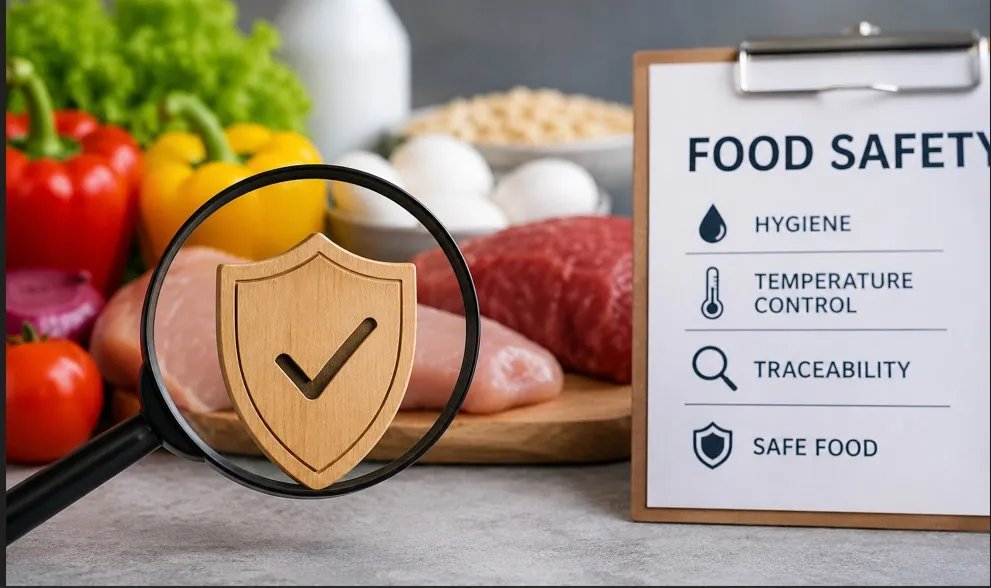
But the issue goes much deeper than whether a jalebi is unnaturally bright or a curry contains excessive colour. For India’s rapidly expanding and increasingly complex food ecosystem, the bigger question is whether food remains safe from the moment ingredients are procured until the time it reaches the consumer.
Chef Ishijyot Surri, Executive Chef and Founder of Mulk & SJI Hospitality, believes India’s understanding of food safety needs to move beyond the traditional focus on adulteration. “Food safety in India has moved far beyond the old conversation of adulteration—whether milk is diluted or spices are compromised,” he says.
The shift is being driven by the complexity of modern food supply chains. A meal may pass through central kitchens, processors, warehouses, aggregators, cold-storage facilities and last-mile delivery networks before reaching a consumer. Every additional touchpoint creates another opportunity for food to become unsafe.
That means a food item can be completely genuine and still pose a risk. Incorrect temperatures, poor handling, microbial growth and cross-contamination may leave no visible indication that something has gone wrong. Microbial contamination and temperature abuse are particularly concerning because food can look, smell and taste acceptable while remaining unsafe.
Other risks include chemical residues, allergen cross-contact, incorrect thawing and refreezing, poor water quality and misleading shelf-life information. In professional kitchens, the emphasis is therefore increasingly shifting towards time-temperature control, segregation, sanitation and traceability rather than relying on visual inspection.
Also Read: Modern Indian Lifestyle Is Rewriting Human Fertility: Are We Paying the Price for Economic Growth?
This also changes how food businesses should approach compliance. Increased enforcement does not necessarily mean food has suddenly become less safe. It can also indicate that inspections, awareness and accountability are improving. Yet repeated violations point to a deeper concern: compliance can still be treated as something businesses prepare for when an inspection is expected rather than a discipline followed every day.
The challenge becomes even more pronounced with quick-commerce. Faster delivery has transformed how consumers buy groceries, chilled products and prepared food, but speed brings new food-safety risks involving temperature maintenance, expiry management, storage density and traceability. Chilled and frozen products require an uninterrupted temperature-controlled journey, while technology can help platforms monitor temperatures, track batches and automate expiry alerts.
Mislabelling presents another underappreciated danger. Incorrect manufacturing or expiry dates, undeclared allergens, misleading ingredient information and inappropriate relabelling can directly affect consumer safety. For people with serious food allergies, accurate labelling can be critical. As packaged food and delivery markets expand, businesses need to know what a product contains, when it was produced, where it travelled and who handled it.
India’s fragmented food sector makes uniform enforcement difficult. A five-star kitchen, small restaurant and street-food vendor cannot realistically operate under identical compliance models. However, the safety outcome must remain non-negotiable. Practical, tiered compliance supported by training can help smaller operators address fundamentals such as safe water, hand hygiene, temperature awareness, separation of raw and cooked food, pest control and correct storage.
Also Read: AI in Healthcare: The Shift From Reactive Treatment to Predictive, Patient-Centric Care
Ultimately, food safety cannot rest solely with regulators. Food businesses themselves have a responsibility to protect consumers through supplier qualification, temperature records, staff training, internal audits, allergen controls, recall mechanisms and traceability systems.
As Chef Surri puts it, “The strongest food businesses will increasingly treat safety not as a regulatory expense but as part of product quality, brand reputation and long-term consumer confidence.”
The path forward, according to his responses, lies in three broad shifts: stronger digital farm-to-fork traceability, food-safety education and certification for everyone handling food, and risk-based inspections supported by technology and data.
The lesson from the current crackdown is therefore larger than artificial food colouring. Food safety in India is entering a phase where what consumers cannot see may matter just as much as what they can. The future will depend on moving from inspection-driven compliance to everyday prevention—across restaurants, manufacturers, warehouses, platforms, delivery networks and every other link in the food chain.