
Healthcare
From Stents to Smartwatches: How India’s Heart Care Is Learning to Prevent, Not Just Repair
By MILLENNIUM NEWSROOM Desk · Published: Oct 28, 2026 07:14 PM
4 min read
As World Stroke Day arrives on 29 October, a clear shift is reshaping cardiology treatment in India: the focus is moving from rescuing patients after a heart attack to spotting danger before it strikes. Over the past decade, heart care has turned from treating established disease towards early diagnosis, personalised treatment and prevention. Heart disease and stroke share several risk factors, so the change matters beyond the heart.
How cardiology treatment in India has evolved
Today's cardiology begins with a simple idea: find disease early, assess each patient's individual risk, and choose the most suitable treatment. Coronary CT angiography, cardiac MRI and advanced echocardiography enable earlier and more accurate diagnosis.
Personalisation is central: age, symptoms, disease severity, diabetes and kidney function all shape the plan. Preventive cardiology adds another layer, as early control of blood pressure, cholesterol and diabetes helps prevent heart attacks and strokes.
"Cardiology has evolved significantly over the past decade, shifting from treating established disease to emphasising early diagnosis, personalised treatment, and prevention. Advances in medical technology, evidence-based therapies, and minimally invasive procedures have improved the management of cardiovascular diseases. However, the rising burden of heart disease among younger adults highlights the urgent need for greater awareness, regular health screening, and healthier lifestyles."
— Dr. S. K. Malani, D.M. Cardiology, HoD Cardiology, DPU Super Specialty Hospital
Also Read:
Noise Pollution During Diwali Can Cause Permanent Hearing Loss, Audiologist Warns
Why heart disease in young adults is a growing concern
The most worrying trend is the changing profile of patients. Cardiovascular disease increasingly affects younger and middle-aged adults, particularly in populations with a high burden of metabolic risk factors. The drivers are familiar but widespread: sedentary lifestyles, unhealthy diets, obesity and tobacco use; rising diabetes, hypertension and abnormal cholesterol; chronic stress, poor sleep and demanding work schedules; and genetic predisposition. South Asians also show a susceptibility to premature coronary artery disease and metabolic disorders.
The message is plain: heart disease is not only an older person's illness. People with risk factors or a family history of premature cardiovascular disease should seek early screening and timely medical evaluation.
Technology reshaping heart care
Technology has improved diagnostic accuracy and shortened recovery for appropriately selected patients.
- Minimally invasive cardiac procedures: Angioplasty, modern stents and catheter-based valve procedures can reduce the need for open surgery in selected patients.
- Advanced imaging: CT, MRI and three-dimensional echocardiography reveal coronary arteries, heart muscle and valves in detail.
- Robotic assistance: In suitable surgical settings, robotic techniques can improve precision.
- Artificial intelligence: AI-assisted ECG and imaging analysis may help detect abnormalities earlier.
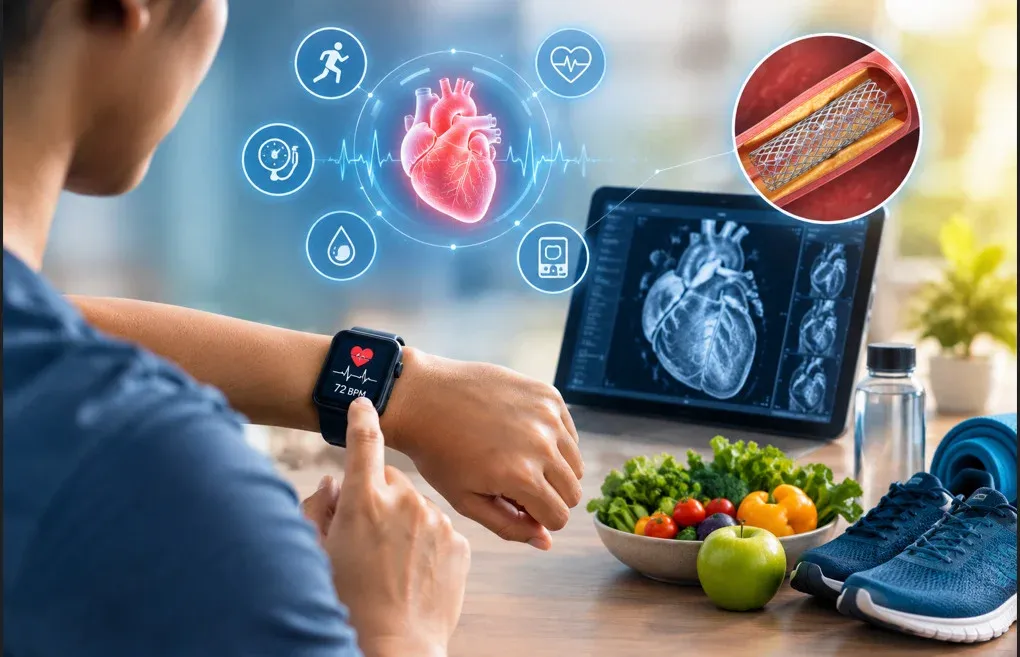
- Wearables: Smartwatches and remote monitoring can flag possible rhythm abnormalities, including atrial fibrillation, which raises stroke risk.
Stent, medicine or surgery?
A narrowed artery does not automatically call for a stent. Medication and lifestyle change suit many patients with stable coronary disease. Angioplasty and stenting are particularly important in acute heart attacks. Bypass surgery may be preferred for complex multivessel disease, significant left main disease or certain high-risk anatomical patterns. Cardiologists and cardiac surgeons may work together, guided by symptoms, anatomy, severity and patient preferences.
Also Read:
Precision Healthcare in India Depends on Smarter Medical Equipment Management
Prevention: the foundation of heart health
Many heart attacks and strokes can be prevented, or their risk substantially reduced, through:
- Exercise: 150–300 minutes of moderate-intensity activity a week, as medically appropriate
- Diet: more vegetables, fruits, whole grains and pulses; less salt, sugar and processed food
- Screening: regular checks of blood pressure, glucose, cholesterol, weight and waist circumference, tailored to individual risk
- Lifestyle: regular sleep, stress management and no tobacco in any form
- Medication adherence: consistent use and regular follow-up
World Stroke Day: protecting heart and brain
Atrial fibrillation can cause blood clots in the heart and lead to embolic stroke. Identifying it, and using anticoagulation when indicated, can substantially reduce stroke risk in appropriate patients.
Remember BE FAST: sudden loss of Balance, visual disturbance in the Eyes, Facial drooping, Arm weakness, Speech difficulty, and Time to seek emergency care immediately. Do not wait for symptoms to resolve or give aspirin without medical assessment.
Also Read:
India’s Heart Health Crisis Is Moving Into Younger Age Groups
What the next decade may bring
Cardiology is likely to become more predictive, personalised and technology-driven. AI and wearables may improve early detection and remote follow-up, while genetic assessment and targeted therapies may help selected inherited conditions. Telecardiology, portable diagnostics and better referral networks could extend services to underserved communities.
"Modern cardiology combines advanced technology, evidence-based treatment, personalised care, and preventive medicine. Yet, the most effective strategy remains early identification and control of cardiovascular risk factors. For India, addressing premature heart disease requires greater public awareness, regular screening, healthier lifestyles, timely treatment, and equitable access to cardiac care."
— Dr. S. K. Malani, D.M. Cardiology
Early detection, timely intervention and prevention can save lives and protect both heart and brain, the goal now guiding cardiology treatment in India.