
Healthcare
Modern Indian Lifestyle Is Rewriting Human Fertility: Are We Paying the Price for Economic Growth?
By MILLENNIUM NEWSROOM Desk · Published: Aug 06, 2026 06:46 PM · Updated: Sep 03, 2026 11:23 PM
4 min read
When Economic Progress Meets Reproductive Health
For a generation of Indians, economic progress has brought better education, greater career mobility and higher aspirations. But it has also changed one of the most fundamental decisions in life: when to have children.
Marriage and parenthood are increasingly being planned around education, careers, financial stability and personal goals. At the same time, sedentary lifestyles, obesity, chronic stress, inadequate sleep, metabolic disorders and environmental exposure are becoming part of everyday life.
The result is a fertility landscape that looks markedly different from that of previous generations.
“Over the past decade, India has witnessed delayed marriages, postponed parenthood, increasing obesity, sedentary lifestyles, chronic stress, poor sleep, environmental pollution and rising metabolic disorders—all of which negatively impact fertility,”
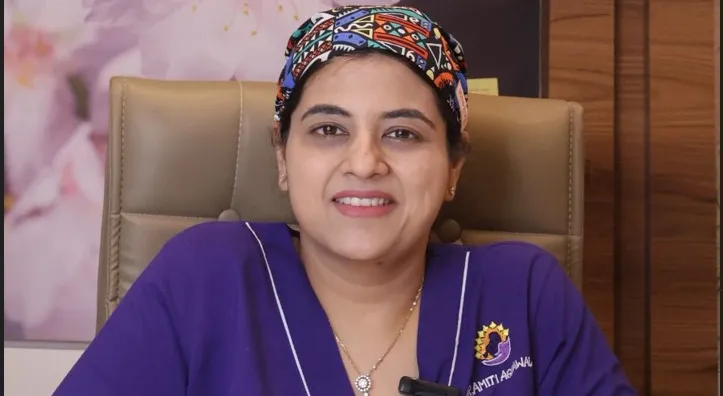
— Dr. Amiti Agrawal, IVF Consultant & Medical Director, Sunshine Fertility & IVF Centre
When Career Timelines Meet Reproductive Ageing
India's fertility transition is already visible at the population level. UNFPA reports that India's total fertility rate has fallen to around 2.0, down from 2.9 in 2005. Yet a lower fertility rate does not necessarily mean that people no longer want children.
UNFPA's 2025 India findings show that financial limitations, job insecurity, housing and childcare are among the barriers shaping reproductive decisions. For individual couples, however, the issue is more complicated than demographics.
Female fertility declines with age, with age being the single most important predictor of fecundity, according to the American Society for Reproductive Medicine. The chances of pregnancy and live birth decrease significantly with advancing age, particularly after 35.
ASRM recommends infertility evaluation after six months of trying for women aged 35 or older, rather than waiting a full year.
This creates a difficult mismatch: professional stability may arrive later, while reproductive biology does not necessarily adjust to career plans.
“Economic progress has empowered individuals with better education and career opportunities, particularly women, but it has also led many couples to postpone childbearing until financial and professional goals are achieved. Unfortunately, reproductive ageing does not align with career timelines.”
— Dr. Amiti Agrawal, IVF Consultant & Medical Director, Sunshine Fertility & IVF Centre
Also Read: AI in Healthcare: The Shift From Reactive Treatment to Predictive, Patient-Centric Care
Fertility Is No Longer Only an Age-Related Conversation
Age remains crucial, but younger Indians are not insulated from fertility challenges. Dr. Agrawal points to obesity, polyendocrine metabolic ovarian syndrome (PMOS), endometriosis, thyroid disorders, poor nutrition, smoking, alcohol, environmental toxins and declining semen quality as factors that can affect reproductive health.
PMOS—the new name for what was previously known as polycystic ovary syndrome (PCOS)—is a complex hormonal and metabolic condition that can interfere with ovulation and fertility. The terminology was formally changed in 2026 to reflect the condition's wider endocrine, metabolic and reproductive effects.
Male fertility also deserves greater attention. Dr. Agrawal estimates that male-factor infertility contributes to around 40–50% of infertile couples, reinforcing why both partners should be assessed rather than placing the burden of infertility primarily on women.
Globally, the scale of infertility is substantial. The World Health Organization estimates that about one in six people experience infertility during their lifetime.
Can Lifestyle Changes Protect Fertility?
Some of the factors affecting fertility are modifiable. Maintaining a healthy weight, exercising regularly, eating a balanced diet, sleeping adequately, managing stress and avoiding tobacco are among the practical measures that can support overall reproductive health.
Evidence reviewed by ASRM links obesity with reproductive problems and notes that lifestyle interventions can improve some reproductive outcomes, although their effect on live birth is not uniform across studies.
Tobacco use has been associated with impaired female fecundity and poorer reproductive outcomes, while smoking can also negatively affect semen parameters.
For men, Dr. Agrawal additionally highlights avoiding anabolic steroids and excessive testicular heat exposure, both of which can impair sperm production.
But lifestyle optimisation is not a substitute for timely medical evaluation. IVF and other assisted reproductive technologies can help couples overcome several causes of infertility, but they cannot indefinitely reverse age-related changes in egg quality.
The idea that IVF can simply “pause” reproductive ageing is therefore misleading.
The Larger Public-Health Question
If fertility challenges continue alongside economic and demographic change, the consequences could extend beyond individual couples. India's fertility rate is already around replacement level, while different states are moving through demographic transition at different speeds.
UNFPA describes this as a duality in which some states remain above replacement fertility while others are substantially below it.
Over time, persistent low fertility can contribute to population ageing and alter the size of the future working-age population. At the household level, infertility can also bring emotional, relationship and financial pressures, particularly when treatment remains expensive.
Making Reproductive Health Part of the Conversation Earlier
The answer, therefore, is not to question the ambitions that economic progress has enabled, but to make reproductive health part of the conversation much earlier.
Fertility awareness, preventive healthcare, healthier lifestyles, reproductive education and timely assessment can help people make informed decisions before options become more limited.
As India's aspirations continue to evolve, the challenge may be learning how to ensure that career success and reproductive choices do not have to compete with biology.