
Business
India’s 7% Growth Story Meets a Stubborn Rival: Inflation
By MILLENNIUM NEWSROOM Desk · Published: Oct 16, 2026 05:04 PM
4 min read
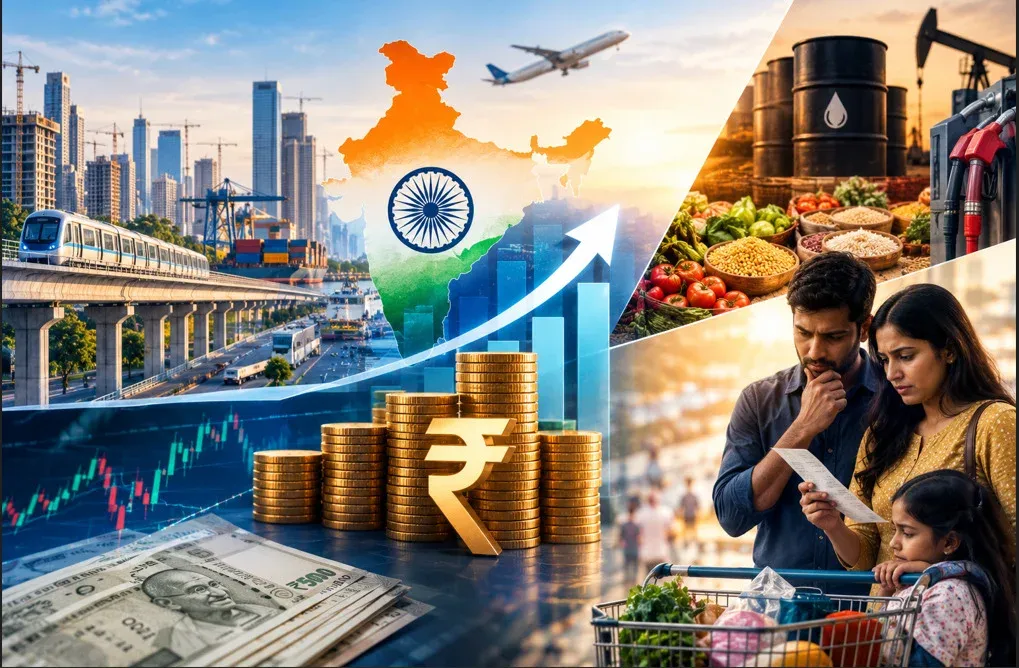
October 16, 2026: India’s economy is moving fast, but household budgets are not keeping pace. While forecasts for India GDP growth point to around 7%, families continue to pay more for food and fuel. A recent bout of rupee appreciation has brought some relief, though analysts caution it may not last.
The Four Engines Powering India GDP Growth
Four pillars are lifting the economy at once. The first is public expenditure, as the government upgrades roads, highways, airports and railway stations. The second is private consumption, which makes up roughly 60% of the economy and is holding firm despite rising prices. The third is private investment, seen in industrial expansion and new installations. The fourth is exports, which are posting double-digit growth despite global headwinds.
“The four engines of the economy are firing at this point of time: public expenditure, private consumption, private investment and exports. With all four firing, the 7% GDP estimate being given by various international agencies, including the IMF, is looking more realistic.”
— Dr. Sharad Kohli, Finance Expert and Tax Advisor
Why Households Still Feel the Squeeze
Strong growth has not eased everyday costs. Tensions in West Asia have kept crude oil prices consistently above $100 a barrel for several weeks. That is pressuring the rupee and energy prices alike. Meanwhile, the El Niño effect has left the monsoon roughly 12 to 13% deficient, pushing up foodgrain prices.
Also Read:
One Seat, Two Prices: How Dynamic Pricing in Aviation Is Reshaping Indian Air Travel
Food and energy are therefore the two main drivers of inflation in India, and their effect cascades into other everyday items. For now, the impact on growth is negligible because consumption is carrying the economy. If inflation stays high for long, however, growth itself could suffer.
Rupee Appreciation: Relief With a Question Mark
The recent rupee appreciation owes less to market forces than to action by the Reserve Bank of India. The central bank supplied dollars directly to oil marketing companies and curbed speculative exposed positions held by banks.
The benefits are tangible. A firmer rupee makes imports cheaper, helps contain inflation to a degree and narrows the trade deficit. The durability of the gain is uncertain, though. India’s import bill is high, and crude oil prices remain elevated. The rupee could come under pressure again.
Who Gains and Who Loses
A stronger rupee helps the broader economy by restraining imported inflation. India imports both finished goods, which not everyone buys, and raw materials, which feed into nearly every product. Because input imports are so widespread, the benefit of cheaper raw materials reaches consumers across classes.
The split is sharper for businesses. Exporters tend to gain more when the rupee is stronger, while importers tend to lose more. The picture reverses when the rupee weakens.
Also Read:
The Résumé Is Losing Its Grip on India's Job Market
Is Growth Reaching the Middle Class?
The gains are uneven, as is typical of emerging economies. India’s population spans the poor, the lower middle class, the middle class, the upper middle class, the rich and the ultra-rich, and each feels GDP growth at a different pace. Some classes benefit sooner, some later, and some barely at all.
Sectors that are expanding quickly, such as services, IT and startups, pass the gains to their workers faster. If high growth is sustained, the benefit should eventually spread more widely.
What Needs to Change
Taming inflation emerges as the central condition for turning headline growth into better living standards. Because consumption underpins the economy, people must be able to afford the goods they rely on.
“If inflation is curtailed, the growth has a lot more potential to go to the next level. Persistently elevated inflation may put brakes on growth at some point, since 60% of our GDP comprises consumption. The moment both these factors are under control, the economy can grow a lot quicker.”
— Dr. Sharad Kohli, Finance Expert and Tax Advisor
The Bottom Line
India GDP growth rests on firm foundations: infrastructure spending, resilient consumption, industrial investment and robust exports. Whether that translates into better lives depends on two external pressures, crude oil prices and a weak monsoon. Rupee appreciation offers a welcome cushion, but its staying power is unproven. Until inflation in India cools, many households will see the growth in headlines more than in their wallets.
Also Read: