
Business
One Seat, Two Prices: How Dynamic Pricing in Aviation Is Reshaping Indian Air Travel
By MILLENNIUM NEWSROOM Desk · Published: Oct 13, 2026 06:08 PM
4 min read
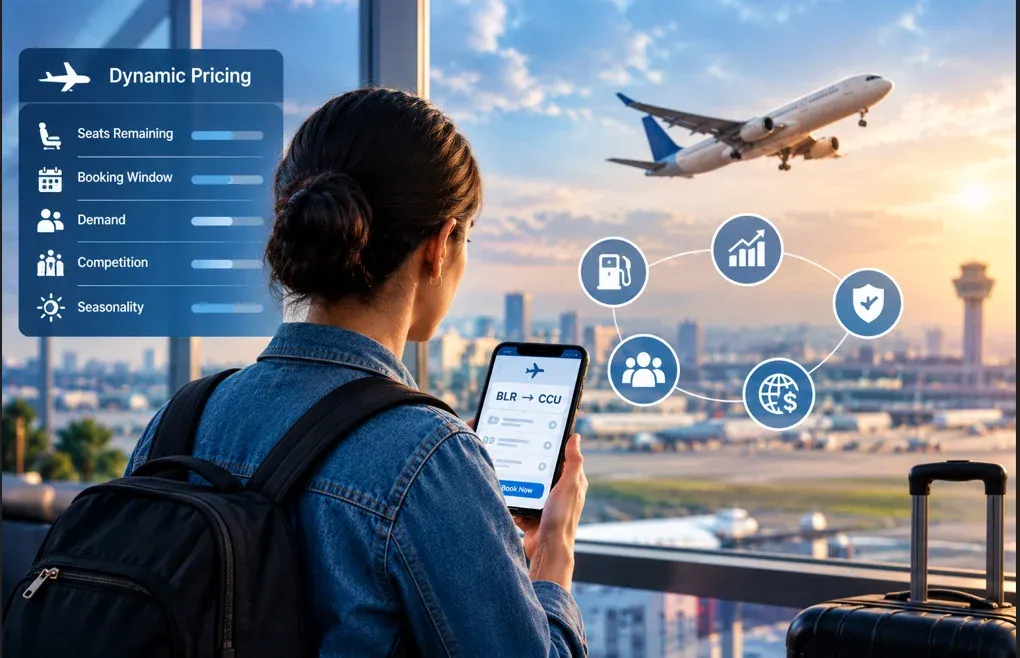
A passenger who flew from Bengaluru to Kolkata paid ₹4,050. Book the same route a day before departure today, and the fare can top ₹8,000. That near-doubling raises a question for millions of travellers: how far is dynamic pricing in aviation making flying harder to afford, and what happens next?
Why airfares in India keep climbing
Two forces drive airfares in India: what it costs to run a flight, and how airlines sell its seats.
On costs, aviation turbine fuel (ATF) typically accounts for around 40% of operating expenses, and the share can climb considerably when fuel prices swing. Leasing, maintenance, airport charges and crew costs add to the bill, and several expenses are denominated in US dollars, adding currency pressure.
On sales, fares are not fixed. Under dynamic pricing, ticket prices move with seats remaining, booking patterns, competition, seasonality and expected demand. When few seats are left close to departure, the last ones can become sharply more expensive.
Also Read:
India's Clean Energy Shift Moves From Capacity Race to System Transformation
A higher fare is not automatically higher profit
A scheduled aircraft still has costs to recover. Airlines sell seats at different price points across the booking cycle: early bookers pay less, late bookers more. Revenue management aims to maximise total revenue from all seats, not to charge everyone alike.
So the Bengaluru–Kolkata jump does not mean profit has doubled. Judging that would require the fare category, taxes and fees, total passenger revenue, seat occupancy and the flight’s operating costs.
“The important distinction is that higher ticket prices do not automatically mean higher profits. Some increases reflect genuine cost pressures, while others reflect market demand and revenue-management decisions. The exact contribution of each factor varies by route, airline and date,” says Dr. Vandana Singh, Chairperson, Aviation Cargo, FAII.
The impact on customers
The burden falls unevenly. Travellers planning a holiday weeks ahead can compare fares, shift dates or choose another flight. Those flying because of a medical emergency, a bereavement or an unavoidable work commitment have little room to manoeuvre and may have to buy the last seat at a far higher price. For them, last-minute airfares are a necessity, not a choice.
Affordability is the wider concern. When fares spike in peak seasons or close to departure, price-sensitive travellers may switch to rail or road, or postpone trips. That matters where many households plan spending carefully and flying connects people to work, healthcare and family.
Also Read:
India's Circular Economy Is Turning Industrial Waste Into Its Next Big Business Opportunity
Probable implications
- Modal shift: Cost-conscious travellers may move to rail or road.
- Regulatory attention: Fares are largely market-determined, but India’s framework allows intervention in specified circumstances, and regulators may investigate excessive or predatory pricing.
- Cost scrutiny: ATF taxation and airport charges will stay in focus. The government’s 2026 ATF price-stabilisation initiative shows how quickly shocks reach passengers.
- Fairer fare products: Airlines may widen their fare options, with transparent conditions and choices for passengers who value flexibility over extras.
What could make flying more predictable
Relief depends on action across the aviation ecosystem: efficient use of airport infrastructure, timely capacity expansion, stronger regional connectivity and more competition. Adding airports alone will not lower fares if demand keeps outpacing seats. Airlines should show the full price, including taxes and extra charges, upfront.
A blanket cap is the delicate question. Keeping fares artificially low without addressing underlying costs is unsustainable.
“I would be cautious about imposing a blanket cap on all fares. Such a measure could discourage capacity on commercially difficult routes or create unintended consequences. A more targeted approach, supported by transparent monitoring and clear intervention criteria, would be more practical,” says Dr. Vandana Singh, Chairperson, Aviation Cargo, FAII.
Also Read:
E20 Petrol at ₹102.12: Why India's Ethanol Gains Are Not Directly Reducing Pump Prices
The bottom line
Dynamic pricing is a recognised commercial practice, and airlines argue it helps them manage demand and recover costs. The debate is about extremes: fare spikes on thinly competitive routes or during disruption, and the lack of safeguards for genuine emergencies. Affordable air travel will come less from capping prices and more from cutting avoidable costs, widening competition, adding effective capacity and keeping pricing clear and fair.
```