
Politics
Delhi Police breaks peace at Jantar Mantar 2.0. Detains independent journalists and passers-by from the protest site
By MILLENNIUM NEWSROOM Desk · Published: Oct 03, 2026 02:35 PM
4 min read
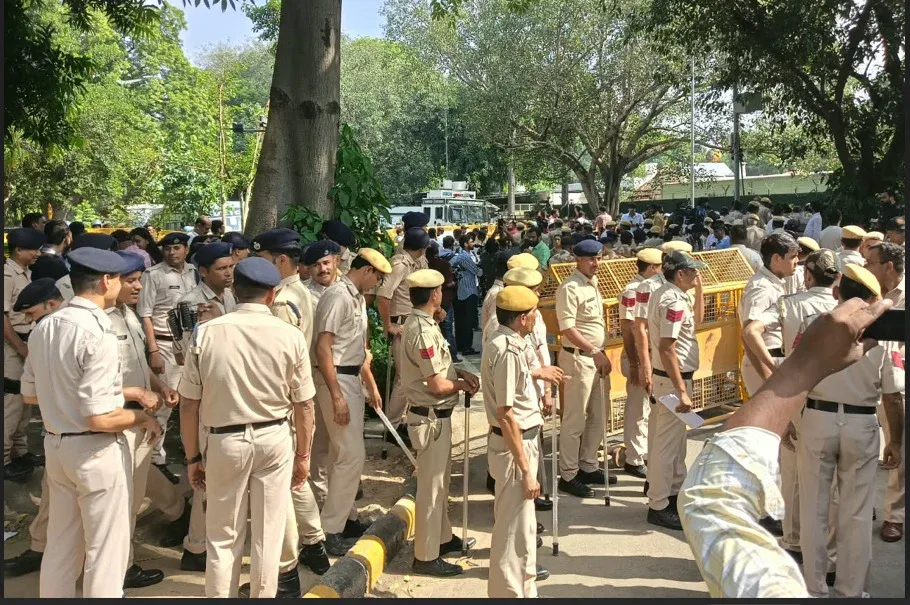
More than 700 protesters were detained from and around the Jantar Mantar protest site on Gandhi Jayanti, October 2, 2026, as Delhi Police enforced Section 163 of the Bharatiya Nagarik Suraksha Sanhita (BNSS) and put up barricades around the area. Reports said the restrictions were imposed ahead of a planned protest against Chief Election Commissioner Gyanesh Kumar and alleged irregularities in the Special Intensive Revision (SIR) of electoral rolls.
Delhi Police had denied permission for the gathering and deployed heavy security in and around Jantar Mantar. Multiple reports said political leaders, student activists and other protesters were detained as they attempted to reach or gather near the protest site.
Political Leaders and Activists Among Those Detained
Among those detained were AISA National President Neha Bora, CPI(M) leader Brinda Karat and several leaders and workers of the Aam Aadmi Party. Reports also identified AAP leaders Atishi, Saurabh Bhardwaj, Sanjeev Jha and Sanjay Singh, along with CPI(M) general secretary M A Baby and other student and youth activists, among those taken into custody.
The protest was organised amid demands for the resignation of Chief Election Commissioner Gyanesh Kumar and concerns raised by opposition parties and student organisations over the SIR exercise and alleged deletion of voters from electoral rolls. These allegations were made by the protesters and opposition groups and have been disputed by the government and Election Commission.
Also Read:
Can CJP Make It Two in a Row?
Police Restrictions and Barricades
Delhi Police began restricting movement around the protest area from the morning. Section 163 of the BNSS was imposed in parts of central Delhi, while barricades were placed on routes leading towards Jantar Mantar. Several metro stations in the area were also temporarily closed as part of the security arrangements.
According to the account provided to Millennium Newsroom, police action began creating tension at around 10:15 in the morning when a protester arrived at the site carrying a picture of Dr. B.R. Ambedkar. The account alleges that the protester was taken to a detention bus by police personnel.
AAP leader and Delhi state president Saurabh Bhardwaj, along with other AAP members, were among the early detainees. Reports independently confirmed that Bhardwaj and several AAP workers were detained after arriving at or attempting to reach the protest area.
Claims of Detentions Beyond the Protesters
The account provided to Millennium Newsroom also alleges that several passers-by were detained despite not being part of the protest. It describes two tourists from Punjab who were reportedly taken to Jaffarpur Police Station, Dwarka District, after they were looking for an alternative route when they found that Janpath metro station was closed.
The same account alleges that the two tourists were standing away from the protest site when they were detained. These specific claims could not be independently verified from the published reports reviewed for this article.
Also Read:
Broken Toilets, Unsafe Water and Crumbling Classrooms: Questions Mount Over India’s School Infrastructure
Journalists Among Those Detained
The account provided to Millennium Newsroom further states that its reporter, who was covering the protest, was detained by Delhi Police over the alleged absence of a VIP card. It also alleges that other independent journalists faced similar action.
Separate reports from the protest described journalists and other people being caught up in the police action, while political and civil society groups accused the authorities of restricting the ability of protesters and others to access the area. The specific circumstances surrounding each reported journalist detention remain subject to verification.
Questions Over Press Freedom and Right to Protest
The detention of protesters and the restrictions imposed around Jantar Mantar have prompted questions from political parties, activists and civil society groups about the balance between public-order restrictions and the right to protest.
Left parties and other political groups criticised the police action, alleging that protesters were subjected to force and that the restrictions curtailed the right to peaceful assembly. These are political and organisational claims about the police response and are not presented here as independently established findings.
Also Read:
NEET Paper Leak to CJP Protests: Why India Needs Lasting Exam Reforms Beyond Crisis Management
The events at Jantar Mantar on Gandhi Jayanti brought together political leaders, student organisations, activists and members of the public amid heightened security in central Delhi. With hundreds detained and access to the protest area restricted, the episode has renewed public debate over how authorities manage large political demonstrations and how journalists and other members of the public are treated while covering or passing through such events.