
Healthcare
India’s Heart Health Crisis Is Moving Into Younger Age Groups
By MILLENNIUM NEWSROOM Desk · Published: Sep 29, 2026 08:04 PM
5 min read
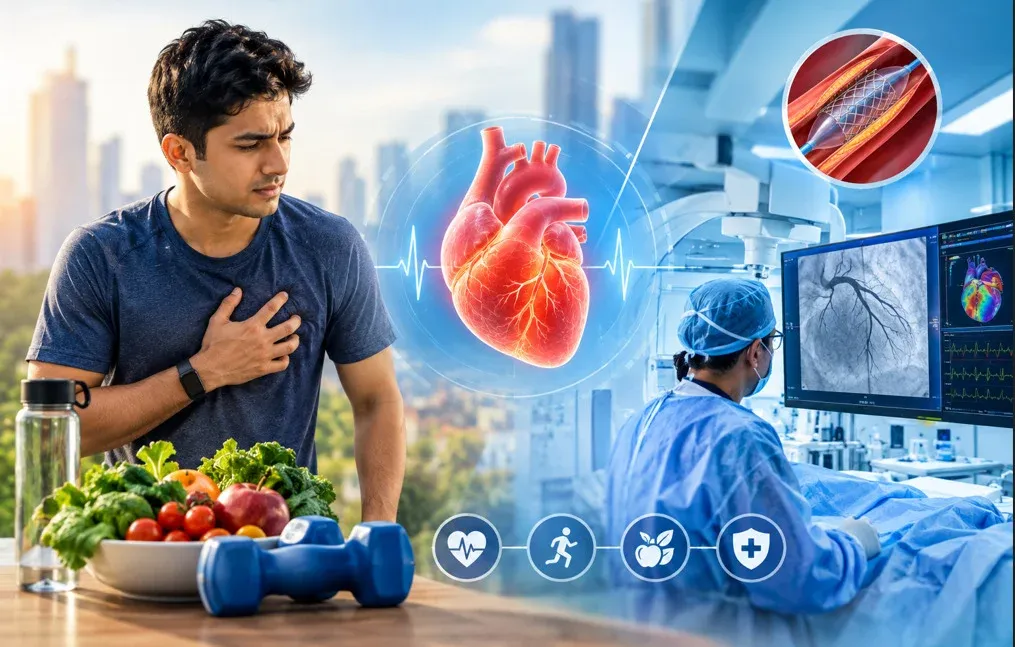
India’s cardiovascular burden is no longer confined to older adults. The risk is increasingly appearing among people in their 30s and 40s, while the underlying process can begin much earlier. The expert responses reviewed for this article point to genetic predisposition, changing lifestyles, urbanisation, metabolic disorders, tobacco use, poor diet, physical inactivity and gaps in screening as key factors behind the changing pattern of cardiovascular disease in India.
The concern often begins before symptoms appear. Hypertension and diabetes can develop silently, allowing risk to remain undetected for years. Urbanisation has also brought more sedentary routines, processed and high-glycaemic diets and chronic stress.
“Hypertension, diabetes, obesity, tobacco use, poor diet and physical inactivity all contribute. I have seen a big shift in the lifestyle and urbanization which is putting a lot of pressure on these diseases. This urbanization is affecting rural villages which had very low coronary disease and now they have a much higher problem.”
— Dr. Balbir Singh, Group Chairman, Cardiac Sciences, Max Hospital, Saket
Alaso Read:
From Skepticism to the Second Opinion. How Homoeopathy Is Rewriting Its Story in India
Why the Risk Is Moving Younger
The responses identify the 30s and 40s as increasingly concerning age groups, alongside adolescents and younger adults. Atherosclerotic plaque formation can begin during childhood, particularly among South Asians, whose genetic predisposition to abdominal obesity, insulin resistance and metabolic abnormalities can interact with modern lifestyle factors.
Among the major drivers are abdominal obesity, early-onset diabetes, hypertension and mixed atherogenic dyslipidaemia, including high triglycerides, elevated ApoB and high Lp(a). Refined-carbohydrate diets, physical inactivity, smoking and other addictive agents can further accelerate the process. This shifts the focus from treating disease after it develops to primordial and primary prevention early in life.
Also Read:
Why India's Next Healthcare Leap Depends on Who Controls the Data
Dietary habits, physical activity and tobacco avoidance are therefore important areas for intervention. The responses also stress wholesome foods such as whole-grain cereals, vegetables, fruits, fish, lean meats and nuts, while recommending that processed foods and refined sugars be avoided.
Another concern is the growing overlap between cardiovascular, renal and metabolic conditions. Patients may present with disease affecting coronary, cerebral, peripheral and renal vessels rather than with one isolated condition. This cardio-renal-metabolic pattern requires treatment that addresses multiple risks through lifestyle modification, medical therapy and coordinated care.
“Thus we need to change our mindset from thinking that who should protect his heart from everyone should protect their heart. When should you get your heart checked or when you should get your risk factors checked, much early in life than what we do. At least getting a blood sample, getting your blood pressure checked is a very simple routine that can be followed by young people.”
— Dr. Balbir Singh, Group Chairman, Cardiac Sciences, Max Hospital, Saket
Technology Is Changing Cardiac Treatment
Treatment options have expanded significantly. Primary angioplasty, or primary PCI, has become an important emergency intervention for acute STEMI heart attacks, with patients taken rapidly to a catheterisation laboratory to restore blood flow.
Minimally invasive procedures have also changed the treatment landscape. CABG can increasingly be performed using minimally invasive techniques, while TAVR can replace an aortic valve through the groin without opening the chest. Similar transcatheter approaches are available for other valves, including the mitral valve. Structural heart procedures such as MitraClip have also expanded minimally invasive options.
Arrhythmia care has advanced through radiofrequency ablation and pulse-field ablation for atrial fibrillation. Pacemakers, cardiac resynchronisation therapy and ICDs have also become more efficient, while conduction-system pacing can provide near-physiological electrical activation.
Heart-failure care is benefiting from monitoring technologies. Implantable sensors in ICD devices and dedicated LA and HL sensors can help detect deterioration earlier, allowing timely intervention.
“The most concerning trend is the shift of cardiovascular risk into younger adults often in their 30s and 40s and even adolescents.
Atherosclerotic plaque formation begins much earlier in childhood, particularly among South Asians who are genetically predisposed to abdominal obesity and metabolic syndrome. Key drivers include the unique metabolic syndrome phenotype of the Indian subcontinent: abdominal obesity, early-onset diabetes, hypertension and mixed atherogenic dyslipidaemia.”
— Dr. Munna Das, Consultant - Adult Cardiologist, Narayana Hospital, Howrah
The Next Technology Frontier
Artificial intelligence is emerging as another potential shift in cardiac care. The responses point to AI being integrated into inpatient management and procedural workflows, including visualisation of the heart, diagnosis and treatment guidance. AI-driven precision medicine could support earlier detection, more accurate risk stratification and personalised therapeutic strategies.
Advanced imaging, including CT-based assessment, is also being used to understand disease and plaques, creating opportunities for earlier preventive intervention.
Yet technology cannot by itself close the gaps in cardiovascular care. Timely diagnosis, emergency transport, specialist access, affordability and continuity of treatment remain uneven, particularly outside major cities. A hub-and-spoke STEMI network linking smaller hospitals with designated PCI centres and ensuring prompt transportation has been identified as one practical approach.
Also Read:
Why is it better to go for a robotic knee replacement surgery than a conventional one?
The broader challenge is to move cardiovascular care further upstream. Screening from early adulthood, or even childhood, combined with healthier diets, physical activity, tobacco control and stress management can help identify and address risk before disease becomes clinically evident. The responses also stress collaboration between government and private healthcare providers to improve access.
India’s changing cardiac landscape therefore has two parallel stories: a growing burden driven by earlier and interconnected risk, and an expanding treatment ecosystem offering increasingly precise and minimally invasive interventions. The long-term impact will depend not only on advanced cardiac technologies, but also on how early cardiovascular risk is recognised and addressed.