Technology
Why Automotive Manufacturing Automation Still Can't Work Without Human Engineers
By MILLENNIUM NEWSROOM Desk · Published: Nov 05, 2026 07:05 PM
4 min read
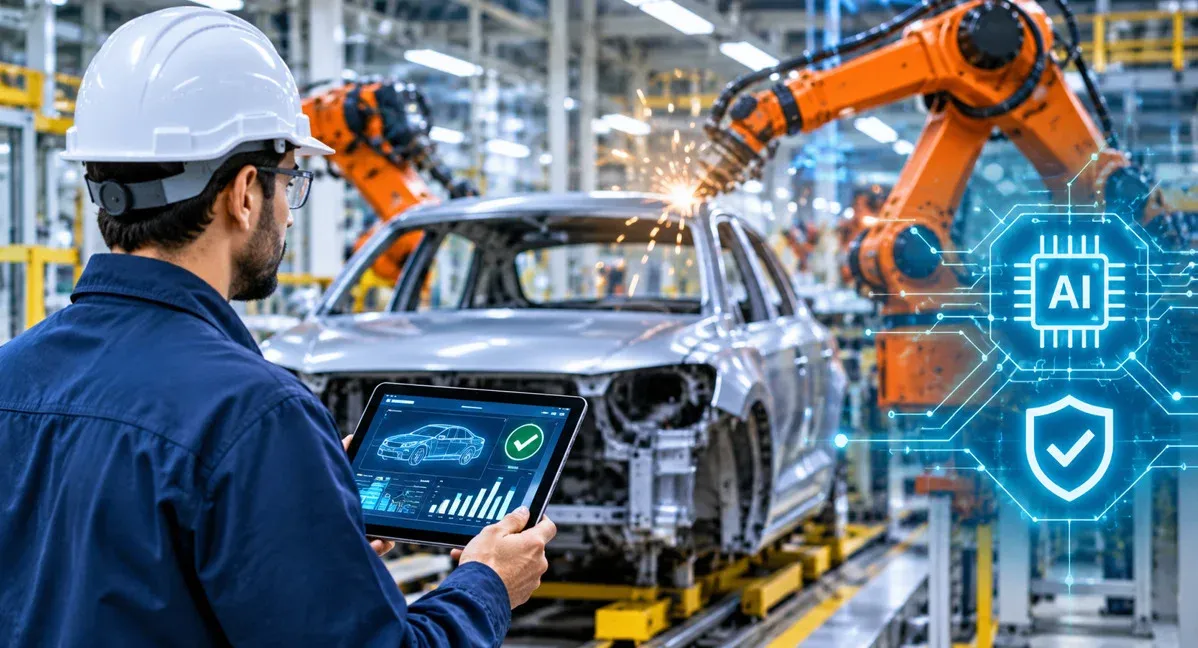
Ford has handed the car industry an uncomfortable question: what happens when automation is asked to do more than it can? In a Bloomberg report published on June 25, 2026, Ford executives acknowledged the company had leaned too heavily on artificial intelligence for quality, and had brought in roughly 350 experienced engineers to correct course. The episode has made automotive manufacturing automation one of the most closely watched debates on factory floors worldwide.
What Ford has actually said
Charles Poon, Ford's vice president of vehicle hardware engineering, said the company "mistakenly" believed that introducing AI and feeding it design requirements would be enough, and that it had not paid enough attention to its most knowledgeable engineers. Ford later clarified that the 350-plus specialists were a mix of internal promotions and new hires rather than simple rehires, adding that AI "is only as good as the people using it."
Media accounts say Ford deployed about 900 AI-powered inspection cameras, a figure Ford has not confirmed. The backdrop is mixed: Ford set a record for recalls in 2025, yet topped J.D. Power's Initial Quality Study among mainstream brands this year.
Also Read:
Thirsty Giants: The Hidden Environmental Impact of India’s Data Centre Boom
Ford has not published its internal findings, so a direct link between the camera rollout and the hiring cannot be proven. The story does expose a well-understood technical limit.
Why vision alone cannot certify a vehicle
AI-based automotive quality inspection excels at spotting what a camera can see: a missing clip, a misaligned panel, a surface flaw. A vehicle's quality, however, is also decided by what cameras cannot see.
"AI vision can detect visible defects, but it cannot establish overall vehicle quality on its own. Internal weaknesses, fastening integrity and long-term durability require other forms of testing. Detection performance also depends on representative training data, lighting, camera coverage and changes in production conditions."
— Abhit Kumar, CEO, Integra Robotics
That last point matters on a live production line. A model trained on yesterday's parts can quietly lose accuracy when a supplier changes a component or a station is rearranged. Detecting a defect is also different from diagnosing it. Seasoned engineers connect an inspection result to assembly steps, supplier variation and earlier failures, and remain essential when a problem is unfamiliar or a fix must be validated.
Also Read:
Invisible Grid: How AI Became Human Civilisation’s New Infrastructure
The fix: connect the data, not just add cameras
Reliable AI quality control often comes from better integration of established technologies rather than exotic new ones.
"Combining vision results, assembly-force profiles and electrical test data gives manufacturers a stronger basis for detecting faults than any one check alone. For example, a connector can appear fully seated while failing an electrical continuity test, and an abnormal insertion-force profile can indicate misalignment or jamming."
— Abhit Kumar, CEO, Integra Robotics
Tying these results to individual assemblies and process controls lets plants identify suspect parts and trace recurring problems to their source. Predictive analytics adds another layer by flagging equipment deterioration before it causes breakdowns or affects product quality. Together, these tools shift quality work from catching defects after production to preventing them during it.
Can quality assurance run without people?
Not entirely, at least not yet. Individual inspection tasks can run without routine human intervention under well-defined, validated conditions. End-to-end quality assurance is broader: changing components and unfamiliar failure modes make complete autonomy harder to achieve.
Validation therefore has to be rigorous. It should cover known defects, borderline cases and production variations, and measure missed defects separately from false rejections. Uncertain results should trigger additional inspection, with engineers responsible for oversight.
The lesson: protect engineering knowledge
Ford's experience points to a clear takeaway for manufacturers. Invest in technology, but preserve the knowledge that makes it work. Documenting past failures, corrective actions and shop-floor observations strengthens inspection systems and process controls. Senior engineers should guide AI training and design reviews so the technology learns why defects occur. That echoes Poon's own admission about overlooking experienced people.
What it means for Indian suppliers
Over the next five to ten years, more systems will likely detect production shifts and correct them within validated limits, reducing routine monitoring. Engineers will still validate changes, investigate unfamiliar failures and introduce new products safely.
For Indian automotive suppliers, the practical path is gradual: automate a well-understood process, prove its reliability, then expand step by step. AI quality control complements human judgment rather than replacing it.
Also Read:
ADAS in India Helps Drivers Avoid Crashes, Not Just Survive Them
The bottom line
Ford's reset is not a retreat from automation; the AI tools remain and are being retrained. It is a reminder that automotive manufacturing automation succeeds when machines handle speed and consistency, and experienced engineers handle diagnosis, validation and accountability. The manufacturers that pair the two will be best placed to prevent defects, not merely detect them.