
Education
NEET Paper Leak to CJP Protests: Why India Needs Lasting Exam Reforms Beyond Crisis Management
By Dona Kundu · Published: Jul 24, 2026 07:31 AM · Updated: Jul 24, 2026 08:24 PM
4 min read
NEET Paper Leak Sparks Renewed Debate on India's Examination System
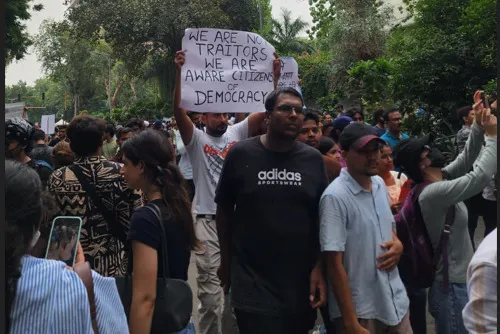
The recent protests at Delhi's Jantar Mantar have once again brought India's examination system under intense public scrutiny. Triggered by allegations surrounding the latest NEET paper leak and concerns over irregularities in the CBSE's on-screen marking process, the demonstrations have grown into a broader student-led movement demanding systemic reforms rather than temporary fixes.
What began as a satirical youth campaign under the banner of the Cockroach Janta Party (CJP) has attracted support from several student organisations, including AISA, AISF and SFI, while environmentalist Sonam Wangchuk has also joined the movement through a hunger strike. The focus has gradually shifted from a single examination to wider questions of institutional accountability, transparency and public trust.
A System Serving Millions Faces Growing Pressure
India's education system operates on an unprecedented scale, serving more than 26 crore school students and approximately 4.5 crore higher education learners. Managing examinations for such a vast population requires robust governance, secure processes and consistent implementation.
While the National Education Policy (NEP) 2020 introduced reforms focused on competency-based learning, digital integration and institutional accountability, recurring examination controversies have raised concerns about the effectiveness of implementation.
Recurring Leaks Raise Questions Over Execution
The repeated emergence of examination leaks has shifted public discourse from isolated administrative lapses to concerns over structural weaknesses. Students and parents argue that recurring breaches undermine merit, compromise years of preparation and erode confidence in competitive examinations.
Experts point to several recurring vulnerabilities, including centralised transportation of question papers, inconsistent security protocols across examination centres and limited use of real-time technological monitoring during paper distribution.
Industry Calls for Structural Reforms
Commenting on the issue, Vinesh Menon, Education Practitioner & Policy Expert, emphasised that the next phase of reform should prioritise implementation rather than policy announcements.
"The next priority is faster, uniform implementation with zero tolerance for process failures, supported by secure digital systems, AI-enabled monitoring and transparent grievance redressal. India's education regulatory framework must also be rewired to encourage greater participation from credible, professionally managed institutions and established industry groups that can bring governance, innovation, investment and global best practices into education."
Suggested Measures to Strengthen Examination Security
The proposed reform agenda focuses on strengthening operational safeguards across the examination process. Key recommendations include:
- Decentralised encrypted question paper generation closer to examination time or wider adoption of computer-based testing with randomised question banks.
- GPS-enabled tracking and tamper-evident custody for physical question papers supported by real-time monitoring.
- An independent examination security authority to audit printing facilities, transport routes and examination centres.
- AI-assisted systems capable of identifying suspicious score patterns and potential leaks at an early stage.
- Transparent accountability mechanisms alongside fast-track judicial proceedings against those responsible for examination fraud.
- Clearly defined re-examination protocols, grievance redressal timelines and psychological support systems for affected students.
Calls for Greater Institutional Participation
Education stakeholders have also advocated greater collaboration with professionally managed institutions and industry organisations possessing expertise in cybersecurity, digital infrastructure and examination management. Such partnerships, proponents argue, could accelerate the adoption of globally recognised security standards while remaining subject to regulatory oversight.
Government Responds to Growing Concerns
The Union government has maintained that examination reforms should be discussed comprehensively in Parliament. Education Minister Dharmendra Pradhan has reiterated the government's willingness to hold a detailed discussion on NEET and examination-related issues, while Lok Sabha Speaker Om Birla has also indicated readiness for parliamentary deliberations.
The government has proposed fast-track courts to expedite action against those involved in examination fraud. Parliamentary Affairs Minister Kiren Rijiju has also stated that Prime Minister Narendra Modi stressed the need for swift action following the reported leak, highlighting arrests made in connection with the case and reaffirming the government's commitment to strengthening safeguards against future incidents.
Bridging the Gap Between Policy and Implementation
Education experts agree that India's long-term ambition of becoming a global education destination depends not only on progressive policy frameworks but also on effective implementation. Strengthening examination security, adopting advanced technology, ensuring institutional accountability and improving governance remain central to restoring public confidence in one of the country's most critical public institutions.