
Opinion
Broken Toilets, Unsafe Water and Crumbling Classrooms: Questions Mount Over India’s School Infrastructure
By MILLENNIUM NEWSROOM Desk · Published: Aug 16, 2026 05:01 PM
3 min read
Immediately after CJP leader Abhijit Dipke urged citizens to check the conditions of primary schools in their areas, multiple videos on social media channels went viral. Ground work by journalists on the issue has also brought attention to the condition of school infrastructure in several parts of the country.
These videos have emerged from states including Bihar, Gujarat, Rajasthan and others, raising questions about the condition of primary schools and the implementation of the fundamental right to education under Article 21A of the Indian Constitution.
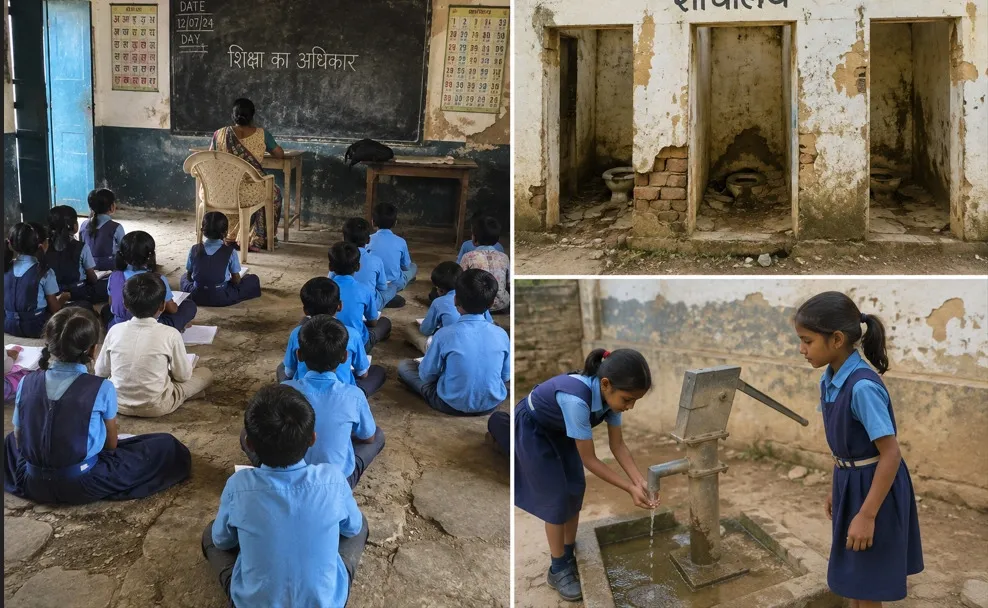
In one social media video that went viral, a journalist showed students sitting on the ground inside their classroom, with three classes reportedly being taught in a single classroom.
Another video showed school toilets in poor condition and apparently unusable. According to the report, children were still being forced to use them because there was no other option. The situation raises concerns about whether children can be expected to learn effectively when basic hygiene facilities remain inadequate.
Another video showed children drinking water from a school tube well that appeared unhygienic and dirty. A girl speaking to the journalist said, “We have to drink this water daily. Many of us get sick because of this. But we don't have any other choice”.
The reported conditions raise questions about the availability of basic necessities such as safe drinking water in schools and the responsibility of authorities to ensure that children have access to hygienic and safe learning environments.
At the same time, multiple videos have emerged showing school authorities allegedly removing media personnel from school premises. The incidents have added another dimension to concerns surrounding transparency and scrutiny of school conditions.
Questions Over the Viksit Bharat 2047 Education Goal
One of the stated objectives associated with Viksit Bharat 2047 is 100% good quality school education. The emergence of videos showing inadequate toilets, unsafe drinking water and overcrowded classrooms has raised questions about how this objective can be achieved if basic infrastructure remains deficient in some schools.
The issue is particularly significant because access to education involves more than classroom instruction. Safe drinking water, functional sanitation facilities, adequate classrooms and a healthy learning environment are fundamental to ensuring that children can attend and participate in school with dignity.
The reported conditions also raise questions about the implementation of the National Education Policy 2020 and the broader goal of ensuring education for all children in India.
Dropout Rate Adds to the Concern
According to the UDISE 2024-2025 report, the national secondary dropout rate is 11.5%. The figure adds another layer to concerns surrounding school access, retention and the broader objective of ensuring that children remain within the education system.
While individual videos cannot by themselves establish the condition of every school across the country, the emergence of similar reports from multiple states highlights the need for closer scrutiny of school infrastructure and implementation on the ground.
The larger question is whether India's education ambitions can be achieved without first ensuring that every child has access to a functioning classroom, usable sanitation facilities and safe drinking water. As the country looks towards the Viksit Bharat 2047 vision, the condition of its primary schools remains an important measure of how effectively those ambitions are translating into everyday realities for children.
(AI generated image)