
Opinion
Character Is Like a Coated Tablet: Either Swallow It Whole or Don't at All
By MILLENNIUM NEWSROOM Desk · Published: Jun 24, 2026 03:30 AM · Updated: Jun 30, 2026 10:28 PM
7 min read
Even the Ganges is turning gray, and we are still humans—moving towards an end we are afraid to see.
A call towards civilization does not always come from within; sometimes it comes from outside ourselves.
Tilottama's rape and murder became that call. It compelled people from the farthest corners of the world to raise their voices against injustice.
It was like the sound of a hollow and deprived heart creating vibrations in the conscience of millions.
Yet one thought continues to haunt us all: perhaps she met such an end simply because she was a woman.
It became a wake-up call for women across the world, symbolized by the "Reclaim the Night" protests that followed the R.G. Kar rape and murder.
However, there is another uncomfortable reality.
Another woman had allegedly attempted to cover up the entire story and supported a strong legal defence for the accused. It presents a striking contrast of character and once again brings us back to the question of individual integrity.
When we look into the mirror and ask ourselves what we truly want, what answer do we receive?
Or have many of us simply stopped asking that question altogether?
For many women in India, perhaps the question itself has faded away.
Understanding Equality
Discrimination on the basis of gender exists across the world.
In a country as diverse as India, however, these forms of discrimination often become difficult to categorize because they are deeply woven into everyday social structures.
The role of a homemaker within a family is undeniably significant. She provides emotional support, stability, and daily motivation. Yet submission to a flawed social system ultimately harms both individuals and society.
Regardless of the position a woman occupies within any organization, she continues to exist inside a system whose expectations she may fundamentally disagree with.
Being against a system does not necessarily mean actively fighting it.
More often, it means becoming institutionalized by it.
These expectations form a chronology of social norms that individuals are expected to follow throughout different stages of life.
Years ago, the television programme Satyameva Jayate, hosted by actor Aamir Khan, featured an episode dedicated to women's empowerment.
One of the guests, activist and poet Kamla Bhasin, explained how a wife provides the daily emotional motivation that enables her husband to leave home each day to earn for the family.
She described this as a cyclical process that society often overlooks while failing to recognize the resilience and strength required from women to sustain it.
Ironically, more than a decade later, discussions surrounding women's empowerment in India still frequently revolve around how well a woman fulfils her responsibilities towards her family.
The exercise of free will has often been subdued by a pseudo sense of duty that also creates a false perception of individual integrity.
This does not mean that India lacks independent women.
We always had them.
We have them today.
And we always will.
Society often labels such women as "different."
Ironically, that definition of "different" is itself very different from what it ought to mean.
Getting Philosophical
Imagine two individuals, A and B, sitting across a table.
If A prefers a burger while B prefers pizza, they are different in the simplest sense of the word.
Unfortunately, in India, "different" has become something far more complicated.
It has become a label assigned to those who ask uncomfortable questions:
"Why can't I?"
"Why can't I go?"
"Why can't I choose?"
The moment these questions arise, society often begins treating the individual as someone who has deviated from an expected norm.
In other words, being "different" frequently means not becoming what society expects you to become.
It is a remarkably diplomatic way of discouraging individuality.
One may argue that unrestricted free will can also be misused.
Many years ago, I found myself in a debate with a woman who held a deeply nihilistic view of life.
She believed existence itself was meaningless and therefore chose not to have children.
Her conviction emerged from what she considered complete freedom of choice.
Let us imagine, for a moment, that the majority of Indian women adopted the same philosophy.
Humanity itself would eventually cease to exist.
Now consider another hypothetical statement:
"A dog must always remain dedicated to its cause."
Here, both the dog and the cause are entirely contextual.
If a cook is paid to prepare meals, the employer becomes the cause.
If an employee works to grow an organization, the organization becomes the cause.
If organizations create employment that strengthens a nation, then the nation becomes the cause.
Similarly, from a biological perspective, human beings are designed to reproduce within the larger ecosystem of life.
In that limited biological context, biology itself becomes the cause.
Whether one agrees or disagrees with this philosophical position, it illustrates the tension that exists between biological purpose and individual free will.
When Justice Begins to Wear a Political Colour
Justice is blind only when society allows it to remain blind.
The moment we begin identifying justice with a political party, an election campaign, or a public narrative, justice ceases to exist as an independent institution.
It becomes a tool.
The R.G. Kar rape and murder was never supposed to become a battle between political camps.
It was supposed to remain what it always was—a demand for accountability.
Yet, as months passed, the public discourse increasingly shifted away from evidence and investigation towards political statements, counter-statements, promises, and public appearances.
Even the words of Tilottama's family appear to have evolved over time.
Before the elections, public statements reflected an unwavering demand that justice must be delivered specifically for their daughter.
In later interactions with sections of the media, the appeal broadened to include justice for every daughter who has suffered violence in India.
Both sentiments are emotionally understandable.
One emerges from personal grief.
The other reflects a broader social concern.
Yet this transformation has also generated confusion among many observers.
A movement that began with one clear objective—the pursuit of justice in one specific case—now risks becoming absorbed into larger political conversations.
When the original demand loses its sharpness, the system often benefits more than the victim.
Justice cannot survive if its direction changes with the political climate.
Character Cannot Be Borrowed During Elections
Democracy gives every citizen the freedom to support any political ideology.
It does not ask anyone to surrender their conscience in return.
Character is not demonstrated during candle marches alone.
It is tested when slogans become inconvenient, when investigations slow down, and when political loyalties begin competing with moral responsibility.
It is easy to demand justice while the nation is watching.
It is far more difficult to continue demanding it after the cameras disappear.
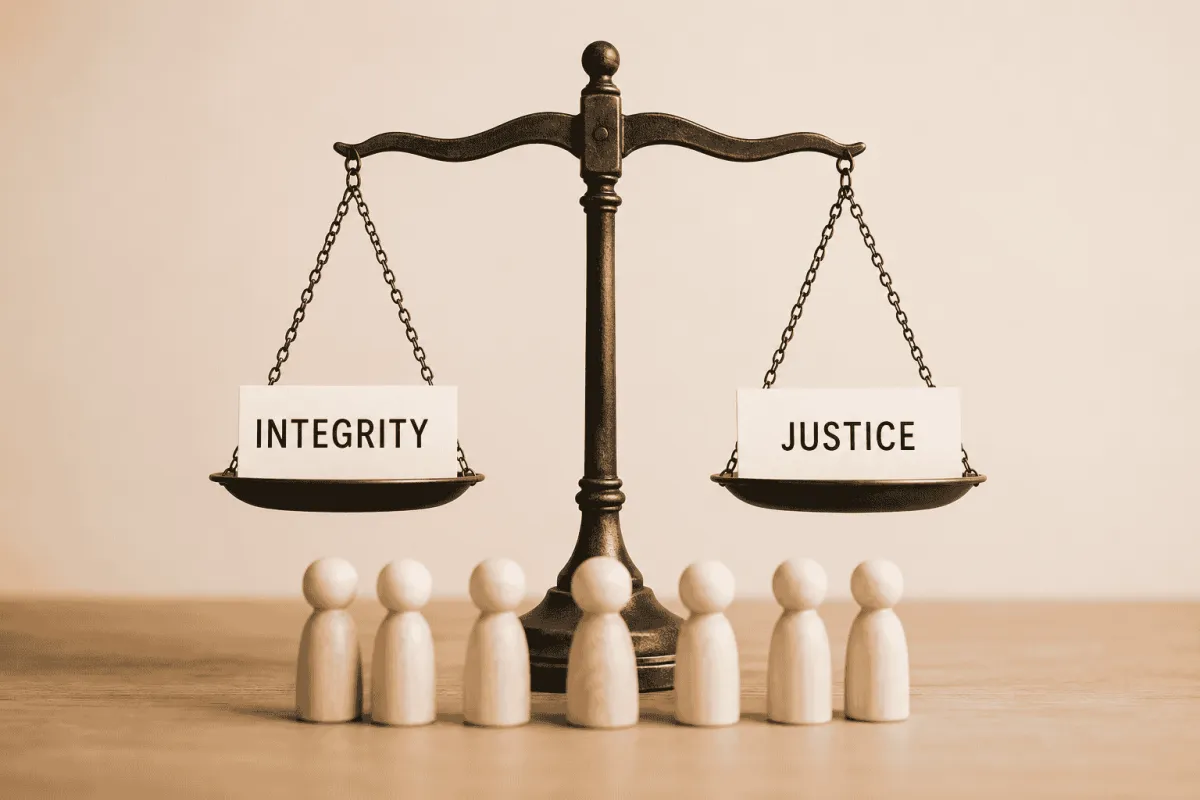
This is where individual integrity becomes the strongest institution within any democracy.
If we begin accepting explanations merely because they come from leaders we support, we stop behaving like citizens and begin behaving like spectators.
A society that replaces evidence with political allegiance gradually loses its ability to distinguish truth from propaganda.
The title of this article compares character to a coated tablet.
It must either be swallowed whole—or not at all.
Integrity cannot exist in fractions.
It cannot be reserved for some victims while ignored for others.
It cannot become active only during election seasons.
The Next Tilottama Depends on Us
The greatest tragedy would not simply be that another crime takes place.
Crimes have existed throughout human history.
The greater tragedy would be a society that no longer recognises when justice begins drifting away from its original purpose.
Every time citizens divide themselves over political narratives instead of uniting around facts, institutions become weaker.
Every time promises replace accountability, another dangerous precedent is created.
Every time emotion overwhelms evidence, public trust in justice diminishes.
Tilottama's story awakened millions because people recognised something universal in her suffering.
They did not march for a political party.
They marched because they believed that a young woman deserved justice without conditions.
If that belief weakens, the consequences extend far beyond one family or one state.
They become a warning for every daughter in the country.
Civilizations do not collapse because they run out of laws.
They collapse when ordinary people lose the ability to recognise justice standing before them.
If we continue judging truth through the colours of political flags rather than the strength of evidence, the system will fail us repeatedly.
And every such failure increases the possibility that another Tilottama will one day become another headline, another protest, another promise—and eventually, another forgotten memory.
Character, after all, is not measured by what we say when the nation is watching.
It is measured by what we refuse to compromise when everyone else has already chosen a side.