
Healthcare
The Broiler Chicken Becomes Ready for Sale in Just Seven Weeks. Is It Good or Bad for Health?
By MILLENNIUM NEWSROOM Desk · Published: Sep 09, 2026 07:25 PM · Updated: Sep 09, 2026 07:31 PM
8 min read
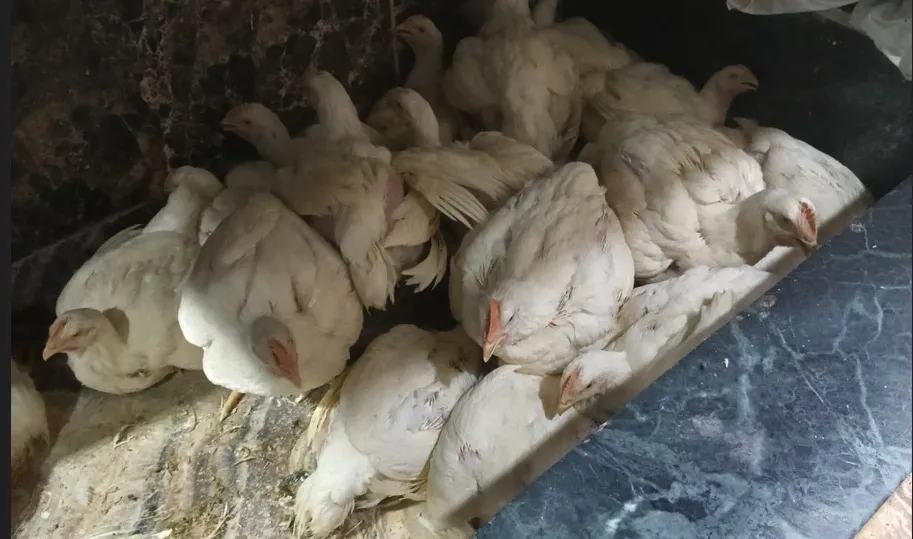
The rapid growth of modern broiler chickens raises interesting questions about the biology and nutrition behind poultry farming. Reaching market weight in just five to seven weeks seems almost unnatural compared to how chickens grew a few generations ago. This contrast invites curiosity about what has changed: is it genetics, diet, farming techniques, or a combination of all three?
It also brings up broader themes, such as how selective breeding and modern nutrition science have reshaped livestock production, and how these changes compare to the slower, more traditional growth patterns seen in country or heritage chicken breeds. Exploring this topic touches on genetics, animal husbandry, feed science, and even ethical considerations around fast-paced industrial farming versus natural rearing methods, making it a rich subject for further discussion.
Millennium Newsroom spoke with By Dr. Ramanuj Panda, Founder & CEO, Gocarin to understand how the broiler poultry farms are able to achieve fast growth in livestock. We also asked questions about the nutrition provided by broiler chickens and if there are any precautions that can be taken to maintain hygiene and food safety.
Modern broiler chickens can reach market weight in just five to seven weeks. What biological and nutritional factors allow them to grow so rapidly, and how does this differ from the growth of traditional or country chickens?
The rapid growth rate in modern broilers is mainly attributed to more than 70 years of selective breeding of the birds for feed conversion efficiency and development of large breast muscles - nothing else. The commercial strains, such as Cobb 500 and Ross 308 are bred exclusively for this purpose generation after generation.
To get a sense of how much the birds changed during this period, one should realize that a broiler of the 1950s took about 12 weeks and around 4 kg of feed per kg of its body weight gain; today's broiler achieves 2–2.5 kg in only 5–7 weeks with the conversion rate of about 1.6–1.8. All this genetic potential is realized through carefully formulated diets for every growth stage, strict control of environmental factors (temperature, lighting, ventilation) and a proper health management regime which eliminates energy waste due to diseases. It takes 4–6 months for country breeds, such as Aseel or Kadaknath, to grow because they were never bred for meat production.
Also read:
Understanding the Transforming Demand for Organic Food in India: Growth Opportunities and Challenges
There is a widespread belief that broiler chickens are given steroids or growth hormones to accelerate meat production. How accurate is this claim, and what actually drives the rapid growth of commercial broilers?
The idea that broilers are given steroids or growth hormones is incorrect. The use of hormones in poultry farming is specifically prohibited in India according to FSSAI rules, and it is not carried out commercially anywhere in the current broiler industry since genetic factors and proper nutrition alone achieve the growth rates that the industry requires, which means that the use of hormones is not only illegal but also economically unnecessary.
This belief probably continues because consumers compare today's chicken with the chicken they remembered from many decades ago and think that something must have been artificially added to account for the difference. In fact, this change is similar to other well-known examples of selective breeding — just as wolves have been gradually bred into large dog breeds or wild teosinte has been transformed into modern corn, the change has been entirely the result of selection and not due to any chemical intervention. The real reasons for the fast growth of broilers are genetic selection for a fast growth rate and feed efficiency, scientifically formulated feed, and carefully controlled rearing conditions.
Can the extremely rapid growth of broiler chickens affect the nutritional composition of their meat?
Broiler meat is still a high-quality and complete protein, and the differences compared to country chicken in this regard are small. The main difference lies in the fat content—since broilers are less active, they have more intramuscular and subcutaneous fat, whereas country chickens are generally leaner because of their higher level of activity. The amount of omega-3 fatty acids and the levels of various micronutrients are more affected by diet than by the breed.
A free-range country chicken that eats insects, greens and a variety of natural food may have a slightly better omega-3-to-omega-6 ratio than a broiler fed on the usual maize-soy diet. Yet a broiler whose diet includes flaxseed or fish meal can achieve or even surpass that ratio. This shows that the nutritional differences are mostly due to diet rather than being an inevitable and fixed result of fast growth or breed category. Broiler meat remains nutritious and comparable.
What are the legitimate concerns around antibiotic use in poultry production, particularly antibiotic residues and antimicrobial resistance, and what does this mean for people who regularly consume chicken?
Concerns about the use of antibiotics in poultry can be broadly divided into two closely related problems: the use of antibiotics at sub-therapeutic or growth-promoting levels, which leads to the development of antimicrobial resistance (AMR), and the presence of antibiotic residues in meat when the required withdrawal period between the last dose and slaughter is not properly observed. The greater public health worry is antimicrobial resistance — bacteria that become resistant on farms do not stay confined to those farms; they can be transmitted to humans through handling of meat, via runoff into the environment, or by contact with farm workers, thereby decreasing the effectiveness of antibiotics used to treat human infections.
Also read:
Eating for Baby's Health, Not for Two. A First-Trimester Nutrition Guide Every Expecting Mother Needs
In response, FSSAI has established Maximum Residue Limits for antibiotics in poultry and prohibited the use of critical drugs such as colistin — an antibiotic used as a last resort in human medicine — in animal feed. For ordinary consumers of chicken, the practical consequence is not immediate harm from one meal but rather the gradual and cumulative loss of the effectiveness of antibiotics; choosing products from traceable suppliers that comply with FSSAI requirements considerably reduces this risk, even though enforcement still differs between India's organised and unorganised poultry sectors.
Consumers often associate very large breasts, high body weight or chickens with difficulty standing with the use of steroids or other drugs. Are these reliable indicators of how the bird was raised, or are there other biological and farming factors that explain these characteristics?
These physical characteristics are reliable signs of an animal's genetic makeup and of the biomechanics associated with rapid growth — not proof that steroids or drugs have been used. The large amount of muscle in the breasts is exactly the feature that decades of selective breeding programmes have aimed at, since the breast meat is the most commercially valuable portion. A high body weight at an early age merely shows what the bird's genetic potential for growth is, together with careful nutritional management, not the result of hormonal intervention.
On the other hand, difficulty in standing or weak legs are a real and well-recorded welfare problem: they occur because the development of the skeleton and legs cannot always keep up with the rate of muscle and weight gain, leading to an internal biomechanical imbalance — this is similar to a teenager going through a spike in height before their bone density and muscle strength have fully caught up. The poultry industry is currently dealing with this issue by introducing slower-growing breeds and by improving lighting and activity control, which once again shows that it is a problem relating to growth rate and welfare that has its origin in genetics and not an indication of drug use.
For an Indian consumer buying chicken from a local meat shop, what practical factors should they consider when choosing chicken for health and food safety, and is there any meaningful nutritional advantage to choosing broiler, country or free-range chicken?
For Indian consumers, concerns about traceability and how the food is handled are far more important when it comes to health and food safety than the difference between broiler and country chicken. If you buy your chicken from shops that are registered or licensed with the FSSAI and ensure that it is stored under the proper cold chain, the risk of contamination is greatly reduced, just as checking that the chicken is fresh does meaning there should be no discoloration or off odour and the chicken must not have been left out of the refrigerator for a long time.
Also read:
Broken Toilets, Unsafe Water and Crumbling Classrooms: Questions Mount Over India’s School Infrastructure
Cooking the chicken thoroughly to an internal temperature of about 74°C is still the most effective way to ensure food safety, as it eliminates common dangers such as Salmonella and Campylobacter regardless of the type of chicken. In terms of nutrition, broiler, country and free-range chicken are all good sources of protein, the differences being small and mainly due to diet rather than the category. In reality, a fresh broiler bought from a licensed shop and kept properly refrigerated is usually a safer option than an untraceable country chicken that has been left out of the refrigerator for hours — this shows that the way the chicken is sourced and handled is much more important than the breed label itself.