
Startup Stories
Fizz With a Function: Inside Misfits’ Bet to Build India’s First Prebiotic Soda
By MILLENNIUM NEWSROOM Desk · Published: Aug 02, 2026 11:17 PM · Updated: Aug 10, 2026 08:49 PM
5 min read
Misfits Wants to Change What Indian Consumers Expect From Soda
For decades, the Indian soda aisle has offered consumers two familiar choices, and neither one was ever really a choice. On one side sits indulgence with a hidden cost — the cold, familiar carbonated drink that tastes like childhood but can work against health goals when consumed regularly. On the other sits health with an indulgence cost — diet and zero-sugar variants that remove the sugar but often fail to offer the taste and experience consumers expect from soda.
For one young professional in Bangalore, the first choice proved more expensive than he had imagined. A single bottle of regular soda a day, consumed without a second thought, left him 12 kilos heavier within four months and facing a blood report that read non-alcoholic fatty liver disease. He was in his twenties, and nothing about his lifestyle appeared unhealthy from the outside.
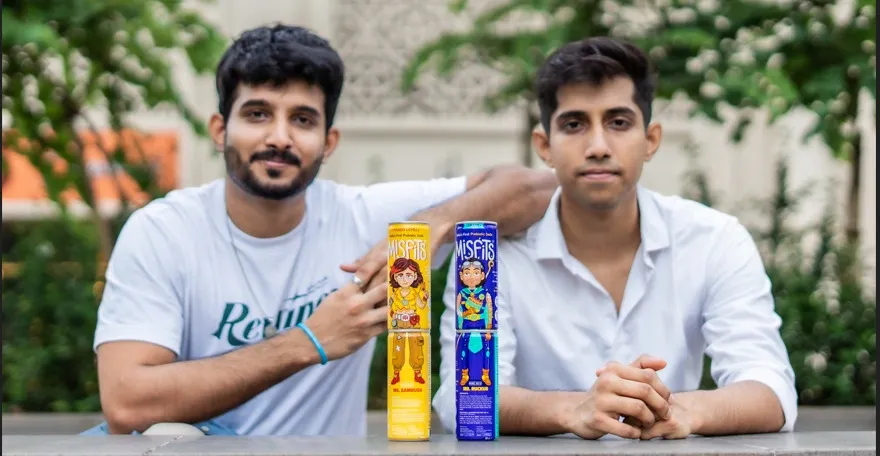
That experience became the starting point for Misfits, which describes itself as India's first prebiotic soda brand. Founded by Aditya Pai, the professional who received the diagnosis, Misfits set out to address a gap in the beverage market: creating a soda that consumers would choose for its taste while also offering a functional benefit.
From Personal Health Scare to Beverage Startup
"That gap was the entire business case," Pai recalls of the months he spent reading labels and discovering that markets abroad had reformulated their sodas while India had "almost nothing" beyond sugar-free substitutes.
He left his job at Samsung, turned his kitchen into a lab and began hand-mixing sparkling water with fruit and fibre. The formulation failed nearly 10 to 15 times before the product became commercially stable.
The approach was built around a simple internal rule: if a beverage does not taste like a soda that consumers would choose on merit, the health benefit is unlikely to matter. The objective was therefore to make the functional component part of a product people would genuinely want to drink.
Building a Soda Around Prebiotic Fibre
Each can of Misfits contains 7g of prebiotic fibre from chicory inulin and FOS, along with 4g of total sugar and zero added sugar. The brand also states that its beverages contain no preservatives and no added colours.
Developing the formulation presented its own technical challenges. According to Pai, fibre affects how carbonation behaves and how flavour reaches the palate, making it difficult to achieve the balance expected from a conventional carbonated drink.
The process of getting the sweetness right without the metallic aftertaste associated with many "healthy" beverages involved months of testing.
Testing the Product Beyond the Lab
Pai prepared small batches overnight and carried them to Mumbai's Bandra-Kurla Complex, where he approached people during lunch breaks to gather direct feedback. He would then return with a revised formulation and repeat the process.
That consumer-testing approach also contributed to the development of Ms. Aambush, the brand's mango-chilli flavour. Pai says the formulation emerged from understanding the Indian palate rather than simply developing it inside a laboratory.
Transparency as a Brand Strategy
Radical transparency forms another part of Misfits' positioning. For Pai, the approach is closely connected to his own experience with health and product labelling.
"I did not develop a fatty liver because I was reckless. I developed it because I trusted a label that told me almost nothing useful."
Misfits publishes its third-party laboratory reports directly on its website, with the reports available in unedited and downloadable form. The approach is intended to give consumers direct access to the information behind the brand's health and nutritional claims.
As Indian consumers become increasingly attentive to ingredients and nutritional labels, the company is positioning transparency as part of its differentiation rather than treating it simply as a compliance requirement.
Breaking Away From Conventional Health Branding
The company's branding takes a different approach from the pastel colours and leaf-based visual language commonly associated with health-focused products.
Instead, Misfits has developed an irreverent identity around characters rather than conventional flavour names, including Mr. Ruckus, Ms. Aambush, Mr. Sublime and Mr. Snapple. The latter contains 50mg of naturally sourced caffeine from yerba mate.
The brand's communication is similarly direct, positioning itself against conventional soda rather than asking consumers to accept a compromise in taste for the sake of health.
From Soda to a Wider Functional Beverage Ambition
Misfits is currently available on Zepto, Swiggy Instamart and First Club with four flavours. The company is being operated by a lean team of four, which Pai says allows it to move quickly from customer feedback to formulation changes and retail availability.
The ambition extends beyond soda towards building a broader functional beverage company. However, Pai believes the immediate challenge is to win what he describes as "the cultural fight" that soda represents.
A major part of that mission is bringing greater attention to fibre, a nutrient that Pai believes is discussed far less frequently by Indian consumers than protein or hydration.
Can Healthy Soda Become a Consumer Preference?
For Pai, the milestone that matters most is not necessarily revenue or distribution. It is the everyday moment when consumers understand what a Misfits can offers in terms of gut health and still choose it simply because they like the taste.
If that behaviour becomes commonplace, the distinction between "healthy" and "enjoyable" beverages could begin to change. For Misfits, the larger ambition is to prove that a functional drink does not have to taste like a compromise — and that better-for-you beverages can compete on taste first.
Also Read This:
From Marks to Meaning: How Smartail Is Rebuilding the Role of AI in Classroom Assessment