
Opinion
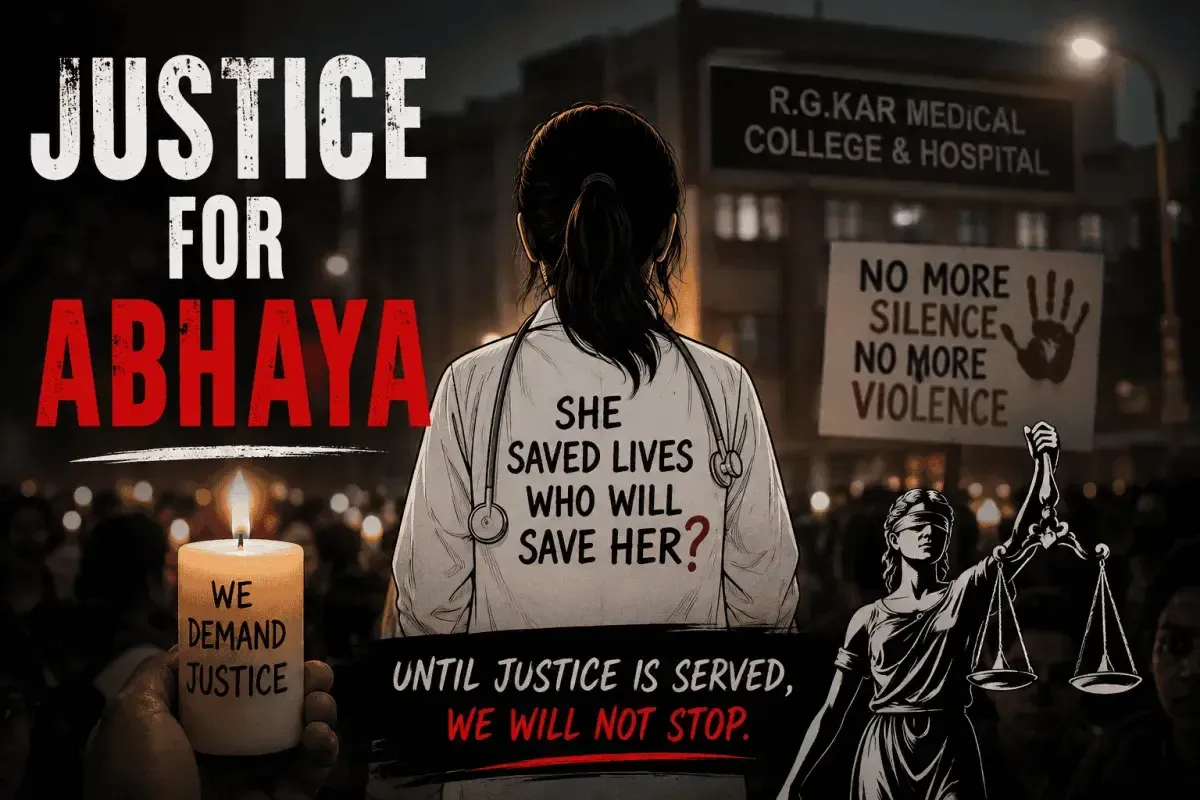
Justice Delayed Is Justice Denied: Has the Fight for Abhaya's Justice Lost Its Original Focus?
By MILLENNIUM NEWSROOM Desk · Published: Jun 20, 2026 03:03 AM · Updated: Jul 01, 2026 04:32 AM
4 min read
Nearly two years after the brutal rape and murder of the young doctor widely known as "Abhaya" inside Kolkata's RG Kar Medical College and Hospital, one question continues to haunt West Bengal and the nation: Where is justice?
The crime, which shook India's conscience in August 2024, sparked one of the largest public protests in recent memory. Doctors walked off duty, citizens occupied the streets through the iconic "Reclaim the Night" movement, and people across political and social lines demanded not just punishment for the guilty, but complete accountability for every individual involved in what many believed was far larger than an isolated crime.
Yet, despite the passage of time, the answers remain incomplete.
While the conviction of Sanjay Roy addressed one part of the investigation, the broader questions surrounding the circumstances of the crime, allegations of evidence tampering, institutional failures and possible attempts to suppress the truth continue to dominate public discourse. In May this year, the Calcutta High Court ordered a fresh investigation into allegations of evidence destruction and directed a Special Investigation Team to examine the sequence of events surrounding the case, giving renewed hope to those who believe the entire truth has not yet emerged.
For many people in West Bengal, however, hope alone is no longer enough.
The old legal principle—"Justice delayed is justice denied"—has become increasingly relevant in the Abhaya case. Every passing month without complete clarity risks weakening public confidence in the justice system. Memories fade, witnesses become difficult to trace, evidence grows harder to preserve, and the emotional urgency that once united millions inevitably begins to diminish.
That is precisely why time matters.
Before the 2026 West Bengal Assembly elections, Abhaya's mother, Ratna Debnath, repeatedly declared that she had entered politics with one objective—to ensure justice for her daughter. Her campaign consistently centred on accountability, and she often maintained that those responsible for the failures surrounding the case should also face consequences.
Following the formation of the new government, fresh developments did emerge. Senior police officers were suspended, the investigation was widened, and the victim's parents publicly welcomed those decisions, saying they had revived hope that additional arrests could follow.
However, the latest public messaging from Ratna Debnath reflects a broader focus.
Speaking to the media after the reopening of aspects of the investigation, Ratna Debnath said that the case had been reopened and expressed hope that not only her daughter, but every daughter in India who has suffered violence against women would receive justice.
The sentiment is undeniably compassionate and reflects concern for women across the country.
Yet it also raises an uncomfortable question.
For countless people who joined candle marches, doctors' protests and statewide demonstrations demanding justice specifically for Abhaya, the primary expectation remains unchanged: they want to know whether every person responsible in this case will be identified and held accountable.
That expectation has not disappeared.
It is important to recognise that violence against women is a national issue deserving equal attention. Every survivor and every victim deserves justice. But the RG Kar case occupied a unique place in India's public consciousness because it symbolised more than a criminal act—it became a test of institutional accountability, transparency and public trust.
The public outrage was not driven solely by the brutality of the crime. It was fuelled by allegations of procedural lapses, questions surrounding the handling of evidence, and the widespread perception that important questions remained unanswered. Those issues continue to await definitive legal resolution.
Meanwhile, Sanjay Roy has consistently maintained that he has been framed, a claim he has repeated throughout the proceedings. His assertion remains his defence, and the broader investigation into other aspects of the case continues independently.
This is precisely why the demand for speed has become as important as the demand for justice itself.
Justice delayed does not merely prolong legal proceedings—it prolongs uncertainty for a grieving family, frustration for citizens and doubt in public institutions. The longer the process continues without comprehensive answers, the greater the risk that one of India's most significant demands for accountability gradually fades into political rhetoric rather than judicial resolution.
Abhaya became more than a symbol because millions refused to let her story become another forgotten headline.
Those same people are still waiting.
Not for another promise.
Not for another broad assurance.
But for the complete truth.
Until every unanswered question surrounding the RG Kar case is fully investigated and every individual found legally responsible is brought before the law, many will continue to believe that the promise made to Abhaya—and to the nation that stood beside her—remains unfinished.
Because in cases that shake the conscience of an entire country, justice delayed is, indeed, justice denied.