
National
Discussion Calls for Stronger Child Protection Laws and Better Implementation Amid Rising Crimes Against Children
By MILLENNIUM NEWSROOM Desk · Published: Jul 16, 2026 06:36 PM
4 min read
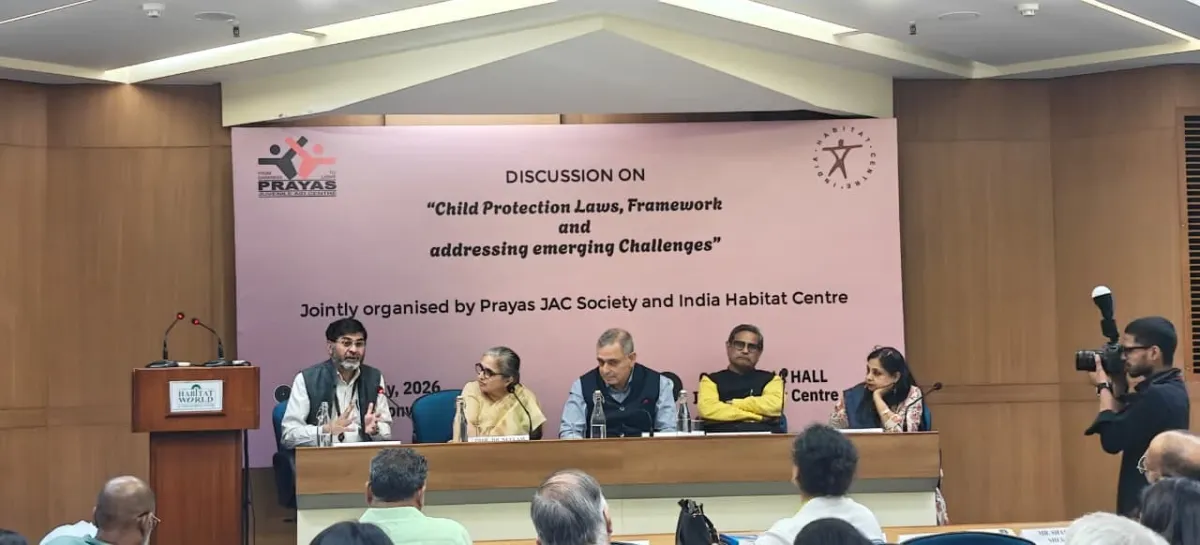
Prayas JAC Society, in collaboration with the India Habitat Centre, organized a multi-sectoral discussion on "Child Protection Laws, Framework and Addressing Emerging Challenges" at Casuarina Hall, India Habitat Centre, New Delhi. The consultation brought together senior government officials, law enforcement agencies, members of the Juvenile Justice Board (JJB), the Delhi Commission for Protection of Child Rights (DCPCR), Child Welfare Committees (CWCs), academicians, legal experts, representatives from international organizations and civil society organizations.
The discussion was held during the Delhi Government's 'Child Safety Month' initiative and focused on strengthening India's child protection ecosystem by addressing gaps in the implementation of existing laws and emerging threats such as cyber crimes, trafficking, exploitation and child neglect.
Focus on Implementation of Child Protection Laws
The consultation also welcomed the reconstitution of the Delhi Commission for Protection of Child Rights (DCPCR) under the chairmanship of Dr. Om Prakash Vyas. Participants examined implementation challenges using the latest National Crime Records Bureau (NCRB) 2024 data while identifying procedural, institutional and systemic gaps affecting child protection.
Discussions emphasized that despite India's robust legal framework, implementation remains a major challenge. Experts called for stronger institutional convergence, holistic interventions and coordinated responses to safeguard children's rights relating to care, protection, development, welfare and rehabilitation.
NCRB 2024 Data Highlights Growing Concerns
Delivering the inaugural address, Mr. Amod K. Kanth, Founder and Mentor of Prayas JAC Society, Founder Chairperson of the Delhi Commission for Protection of Child Rights (DCPCR) and former Director General of Police, said that the effectiveness of child-centric legislation ultimately depends on its implementation.
Citing the NCRB 2024 report, he said that while children in conflict with law committed 34,878 crimes, children themselves became victims in 1,87,702 cases. These included 75,108 cases of kidnapping and abduction, largely involving missing children, and 69,191 cases registered under the Protection of Children from Sexual Offences (POCSO) Act. In comparison, only 1,235 cases were registered under the Child and Adolescent Labour (Prohibition and Regulation) Act, 2016, 2,313 under the Juvenile Justice Act, 2015, and 1,499 under the Prohibition of Child Marriage Act, 2006.
He stressed the need to strengthen Child Welfare Committees (CWCs), Juvenile Justice Boards (JJBs), District Child Protection Units (DCPUs), Special Juvenile Police Units (SJPUs) and other statutory mechanisms. He also highlighted the growing importance of recognising Child Victims of Crime (CVCs) within India's child protection framework.
Experts Advocate Institutional Reforms
Moderating the discussion, Mr. Sanjay Kundu, IPS (Retd.), former Director General of Police, Himachal Pradesh, and Advisor to Prayas JAC Society, said child safety cannot be achieved through isolated efforts. He advocated stronger accountability mechanisms, evidence-based policymaking and institutional convergence while supporting proposals for a comprehensive Child Protection Code, dedicated Children Police Stations and institutional child support systems modelled on One-stop Crisis Intervention Centres.
During the first technical session, Dr. Om Prakash Vyas, Chairperson of DCPCR, called for greater institutional accountability and coordinated action to combat online exploitation, trafficking and child labour. Prof. Neelam Sukhramani of Jamia Millia Islamia highlighted how poverty, migration and child marriage continue to exclude vulnerable children from education and protection, urging greater investment in community-based child protection services.
Mr. Insaf Nizam, Specialist at the International Labour Organization (ILO), emphasized that although India has strengthened its legal framework through international conventions and national legislation, effective implementation and enforcement remain significant challenges. Ms. Dipali Sharma, Director Programmes at ActionAid Association (India), highlighted socio-economic vulnerabilities driving child labour and child marriage while calling for stronger collaboration between government agencies, civil society organisations and local communities.
Cyber Safety and Child-Friendly Justice in Focus
The second technical session focused on evidence-based reforms and implementation challenges. Prof. (Dr.) Sunita Reddy of Jawaharlal Nehru University advocated stronger collaboration among academia, policymakers and implementing agencies backed by research-driven policymaking.
Prof. (Dr.) Ridhima Dixit of the Indian Law Institute highlighted emerging risks such as cyber grooming, online child sexual exploitation and digital safety, stressing the need for stronger legal safeguards, increased parental awareness and greater accountability of digital platforms.
Advocate Anant Asthana discussed legal and procedural challenges involving Child Welfare Committees, children's legal representation and institutional accountability, calling for clearer legal provisions and more child-friendly justice mechanisms.
Need for Greater Coordination
The interactive open house featured representatives from Child Welfare Committees, Juvenile Justice Boards, District Child Protection Units, Delhi Police, Sashastra Seema Bal, British Asian Trust, Railway Children India, academic institutions and civil society organisations. Participants discussed strengthening institutional capacity, improving inter-agency coordination, enhancing rehabilitation and aftercare services, tackling trafficking and cyber-enabled crimes and increasing community participation.
Inspector Vandana Rao of the Juvenile Justice Unit, SPUWAC, Delhi Police, highlighted the importance of building trust between children, parents and law enforcement. She advocated establishing dedicated Children Police Stations to create a more accessible and child-friendly environment.
The consultation concluded with a shared commitment to strengthen cooperation among government agencies, law enforcement bodies, academic institutions and civil society organisations. Recommendations from the discussion will be compiled into a report aimed at improving the implementation of child protection laws and building a more responsive, coordinated and child-centric protection system across India.
(Inputs from Press Release)