
World news
Ukraine Strikes Moscow Oil Refinery Again as Drone Campaign Intensifies; Zelensky Calls It a Justified Response
By MILLENNIUM NEWSROOM Desk · Published: Jun 19, 2026 02:57 AM · Updated: Jun 30, 2026 09:30 PM
4 min read
Ukraine Targets Moscow Oil Refinery for Second Time in a Week
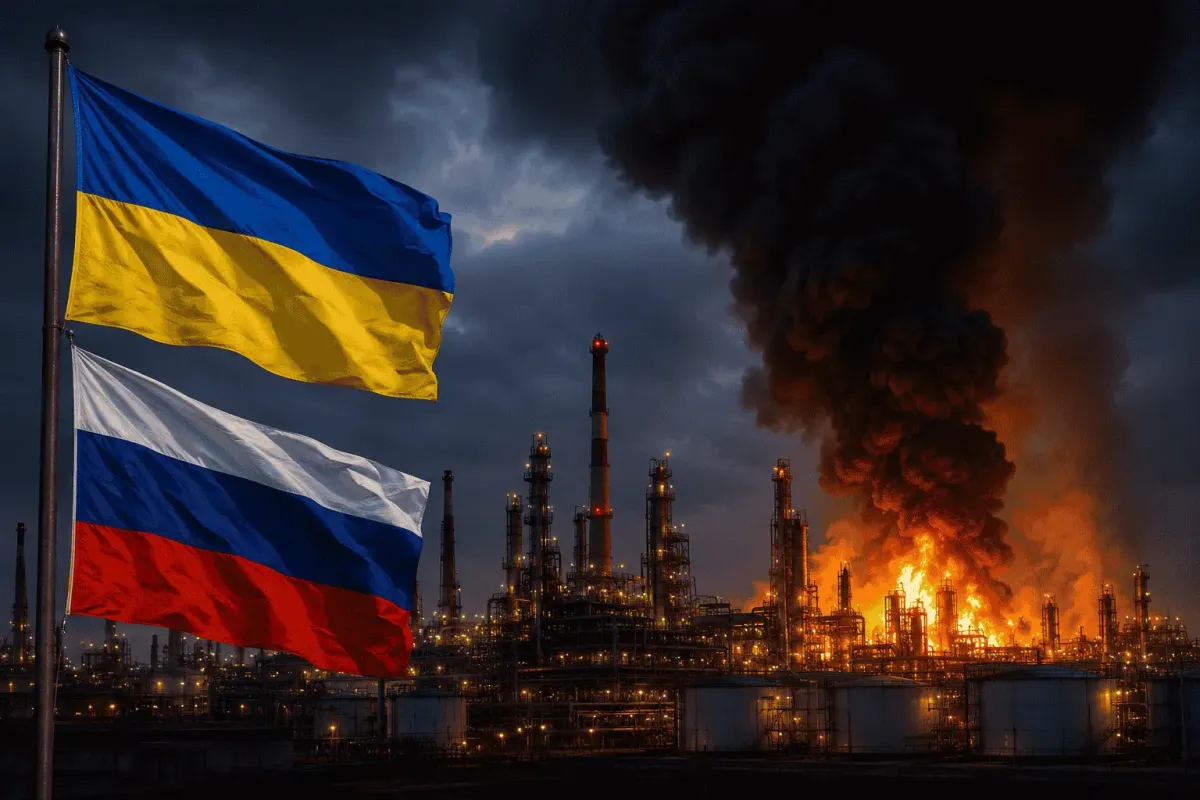
The Russia-Ukraine conflict entered another intense phase on Thursday after Ukraine carried out a fresh drone strike on Moscow's largest oil refinery, marking the second attack on the strategic facility within a week. The strike triggered a fire at the refinery and temporarily disrupted commercial flight operations around the Russian capital, underscoring Kyiv's growing capability to strike deep inside Russian territory.
The latest operation comes just days after Ukrainian forces targeted the same refinery, highlighting a sustained campaign against Russia's energy infrastructure. According to Russian authorities, several drones were intercepted by air defence systems, while others managed to reach their intended targets, causing damage to industrial facilities and prompting emergency response teams to battle the resulting blaze. Reports also indicated temporary restrictions at multiple Moscow airports as a precaution following the attacks.
Zelensky Defends the Strike
Following the attack, Ukrainian President Volodymyr Zelensky said this to the media, describing the operation as a justified response to Russia's continued missile and drone strikes on Ukrainian cities. He maintained that Ukraine's long-range operations are aimed at infrastructure supporting Russia's military campaign and are intended to increase pressure for an end to the war.
The Ukrainian leadership has repeatedly argued that targeting energy infrastructure weakens Russia's logistical capabilities while demonstrating that key military and industrial assets are no longer beyond Kyiv's reach. The latest strike forms part of a broader strategy that has increasingly relied on domestically developed long-range drones capable of travelling hundreds of kilometres into Russian territory.
Strategic Importance of the Moscow Refinery
The Moscow refinery is considered one of Russia's most significant fuel production facilities, supplying a substantial share of the fuel consumed across the capital region. Energy infrastructure has emerged as one of Ukraine's primary military targets over the past year, with repeated attacks aimed at disrupting fuel supplies that support Russia's armed forces and military logistics.
Military analysts believe such strikes carry both strategic and symbolic significance. Beyond causing operational disruptions, successful attacks on high-value infrastructure near Moscow demonstrate Ukraine's expanding drone capabilities and challenge Russia's air defence network around its capital.
Russia Responds With Continued Air Campaign
The latest Ukrainian operation follows a series of Russian missile and drone attacks on Ukrainian cities, including Kyiv, where recent strikes caused casualties and damaged civilian infrastructure. Both countries have significantly expanded their use of long-range drones as the conflict evolves into a war that increasingly targets strategic infrastructure far from the front lines.
Russian officials have condemned the attacks on Moscow, while maintaining that air defence systems intercepted hundreds of incoming drones. Ukrainian authorities, meanwhile, argue that the strikes represent proportionate military responses to continued attacks on Ukrainian territory. Independent verification of battlefield claims made by either side remains difficult during the ongoing conflict.
Drone Warfare Reshaping the Conflict
The Russia-Ukraine war has increasingly become a contest of long-range drone technology. Since the conflict began in 2022, both countries have invested heavily in unmanned aerial systems capable of striking strategic targets deep behind enemy lines.
For Ukraine, repeated attacks on refineries, oil depots and military logistics hubs are intended to reduce Russia's ability to sustain prolonged military operations. Russia, on the other hand, has continued large-scale missile and drone attacks targeting Ukraine's energy grid, transport infrastructure and defence facilities.
The growing reliance on drones has fundamentally altered the battlefield, allowing both sides to project force over vast distances while avoiding some of the risks associated with conventional air operations. Analysts say the increasing frequency of these attacks is likely to keep energy infrastructure and transportation networks under constant threat in the coming months.
Diplomatic Efforts Face Renewed Challenges
The latest escalation comes at a time when international leaders continue to call for renewed diplomatic engagement to end the conflict. However, repeated exchanges of long-range attacks have complicated prospects for meaningful negotiations.
Several Western nations continue to provide military assistance to Ukraine while simultaneously encouraging diplomatic efforts to achieve a lasting peace. Russia has maintained that any future negotiations must address its security concerns, while Ukraine insists that its territorial sovereignty remains non-negotiable.
As both sides continue to exchange strikes on critical infrastructure, the conflict shows little sign of easing. The latest attack on Moscow's oil refinery illustrates how the battlefield now extends far beyond traditional front lines, with strategic economic assets increasingly becoming central targets in one of Europe's longest-running modern conflicts.