CXO View
The Rise of Generative Art: Why AI Is Expanding Human Creativity Rather Than Replacing It
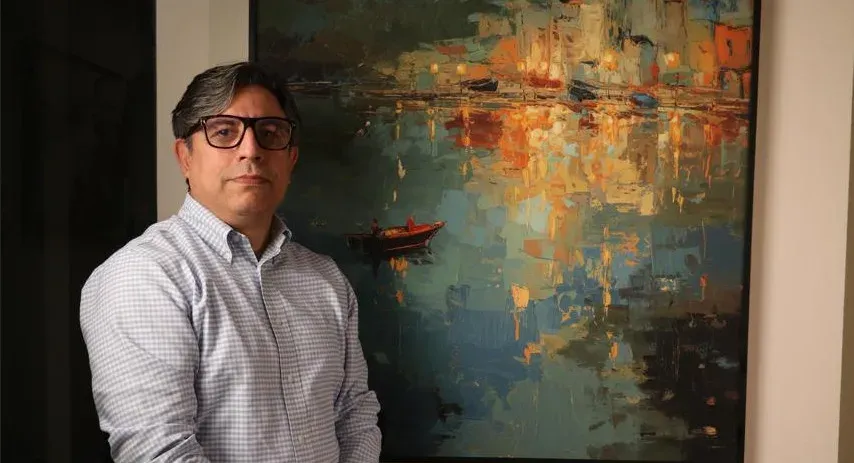
By Suumit Arora, Founder & CEO, Artiure · Published: Jul 29, 2026 08:13 PM · Updated: Sep 01, 2026 08:23 PM
4 min read
Generative AI Is Redefining the Creative Process
Every major tool in the history of art arrived with the same warning. Photography was supposed to end painting. Digital design was expected to replace traditional craftsmanship. Neither prediction came true. Instead, both expanded the possibilities available to artists, allowing them to experiment with new forms of expression while preserving the importance of human creativity.
Generative AI is following a similar trajectory. Rather than replacing artists, it is emerging as a powerful creative medium that enables them to explore ideas faster, experiment more freely, and focus on the aspects of art that machines cannot replicate—meaning, perspective, and storytelling.
AI's Growing Economic and Creative Impact
The scale of generative AI's influence is becoming increasingly evident across industries. McKinsey estimates that generative AI could contribute between $2.6 trillion and $4.4 trillion annually to the global economy. At the same time, Goldman Sachs has projected that approximately 300 million jobs could be affected by automation.
Creative professions, however, appear more likely to evolve than disappear. According to Adobe's 2025 Creators' Toolkit Report, 86 percent of surveyed content creators already use generative AI as part of their creative workflow. Most rely on the technology to accelerate brainstorming, concept development, and production rather than replacing their own creative thinking.
The emerging relationship is one of collaboration, where AI expands possibilities while human creators continue to determine artistic direction and purpose.
Shifting Creative Energy from Execution to Imagination
Time has always been one of the biggest constraints in artistic production. Ideas that once required weeks of experimentation can now be explored within minutes using AI-assisted tools. This fundamentally changes the creative process.
Instead of investing countless hours in repetitive execution, artists can devote greater attention to curation, narrative development, experimentation, and refining concepts. AI generates possibilities, but people remain responsible for selecting, interpreting, and giving those possibilities meaning.
This distinction is critical because originality has never been defined by speed alone. It has always been rooted in perspective, experience, and intent.
Also Read: Sustainability Is Redefining Consumer Trust in India's Food Brands
The Human Role Remains Central
The most compelling examples of generative art are rarely the product of algorithms operating independently. They emerge through continuous interaction between artist and machine.
Prompts evolve into concepts, concepts develop into visual language, and the final creative decisions remain firmly in human hands. While AI can generate countless variations, determining which work communicates emotion, purpose, or artistic value continues to depend on human judgment.
From Creative Scarcity to Creative Abundance
Generative AI has also transformed the economics of artistic production by shifting creativity from scarcity to abundance. A single prompt can produce hundreds of visual interpretations, changing the challenge from creating an image to selecting the one that best conveys a desired message or emotion.
This mirrors the transformation brought about by digital photography. As cameras made image capture easier, photographers became increasingly valued for their ability to compose compelling visuals, evoke emotion, and tell meaningful stories.
Likewise, while AI can generate thousands of images within seconds, only human vision can determine which image deserves to exist and why.
Making Creative Expression More Accessible
Perhaps one of generative AI's most significant contributions is democratizing access to artistic creation. Producing professional-quality visuals once demanded years of formal training and access to expensive equipment. Today, individuals with limited technical expertise can transform ideas into visual works using AI-assisted tools.
This broader accessibility does not diminish professional artists. Instead, it expands the creative economy by allowing more individuals to participate while increasing demand for originality, imagination, and distinctive artistic voices.
Also Read: The Hidden Cost of Tile Failures: Why Quality Installation Is Now a Business Priority
Creativity Becomes the New Competitive Advantage
As barriers to entry continue to fall, creativity itself becomes increasingly valuable. When almost anyone can generate technically competent visuals, qualities such as imagination, conceptual thinking, originality, and storytelling become the true differentiators.
In this environment, thoughtful curation becomes just as important as creation. Platforms that successfully combine artificial intelligence with artistic expertise are likely to shape the future of digital art, bringing curated creative works into homes, workplaces, and public spaces.
The Future of Art Is Human-AI Collaboration
History consistently shows that technological innovation rarely eliminates creativity. Instead, it changes where creative value is generated.
Generative AI is unlikely to replace artists in the same way photography never replaced painting. Instead, it is opening entirely new creative possibilities while increasing the importance of human insight, emotion, and vision.
The defining artists of the coming decade will not compete against artificial intelligence. They will collaborate with it—testing ideas, challenging boundaries, and transforming machine-generated possibilities into meaningful artistic expression. The masterpieces of the AI era will emerge not from humans or machines working alone, but from the dialogue between both.